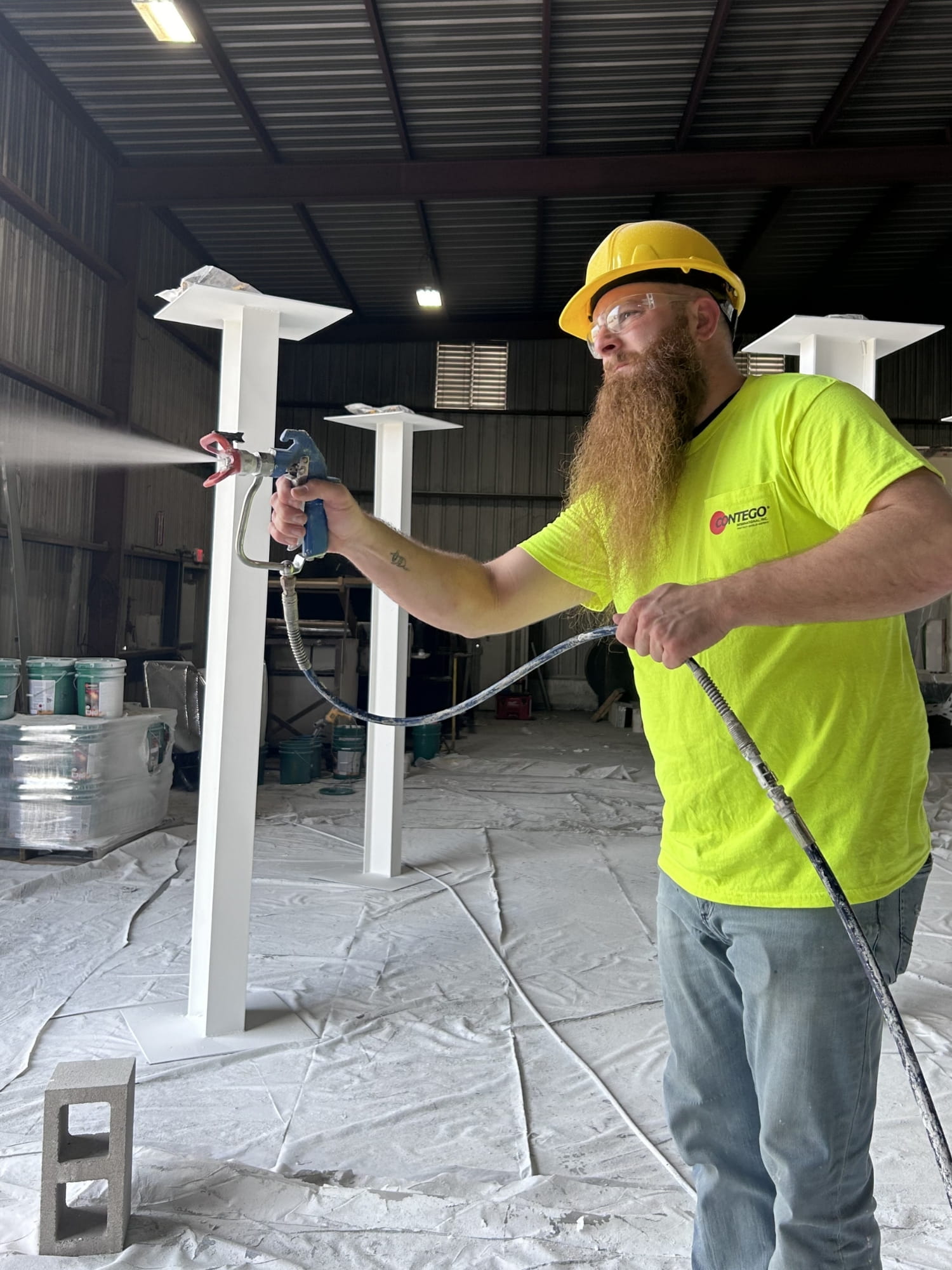
Spray-On Fireproofing: Modern Options, Health Risks, and Safer Alternatives
Apr 26, 2026
Protecting steel structures from fire damage remains one of the most critical decisions in commercial construction. Spray on fireproofing has served as the dominant passive fire protection method since the 1960s, with conventional cementitious products being a common type of passive fire protection. Cementitious fireproofing is typically applied directly to steel structures, forming an immediate protective barrier, but these products require careful consideration of jobsite health, safety, and environmental controls that contractors and project managers must understand. This guide examines how traditional spray applied fireproofing works, the hazards it presents, and why intumescent fireproofing is emerging as a cleaner alternative.
What Is Spray-On Fireproofing?
Spray-applied fire resistive materials emerged in the 1960s as an efficient way to insulate structural members—steel beams, columns, metal decking, and concrete—from rapid heat buildup during a fire. This form of fire protection delays structural failure, buying time for occupant evacuation and firefighter response without extinguishing the fire itself. Structural steel can lose up to 90% of its strength at 1,500°F, highlighting the critical need for effective fireproofing.
The term “sprayed fire resistive material (SFRM)” is used in fire protection regulations and building codes to describe cementitious or fibrous products applied at substantial thickness to achieve required fire-resistance ratings. SFRMs are primarily composed of gypsum or Portland cement, often mixed with mineral wool or vermiculite to enhance their properties. In contrast, “intumescent fire resistive materials” (IFRM) are thin-film coatings that expand into an insulating char when exposed to high temperatures.
Traditional SFRMs produce a thick, rough-textured finish commonly concealed behind walls and ceilings. Intumescent coatings yield a smoother surface suitable for exposed architectural features. Both target 1- to 3-hour fire ratings per IBC and UL designs, with applications spanning:
Office towers and hospitals
Schools and industrial plants
Warehouses and parking garages
Contego International manufactures intumescent fireproofing rather than cementitious SFRM. This article evaluates both from a safety and performance perspective.
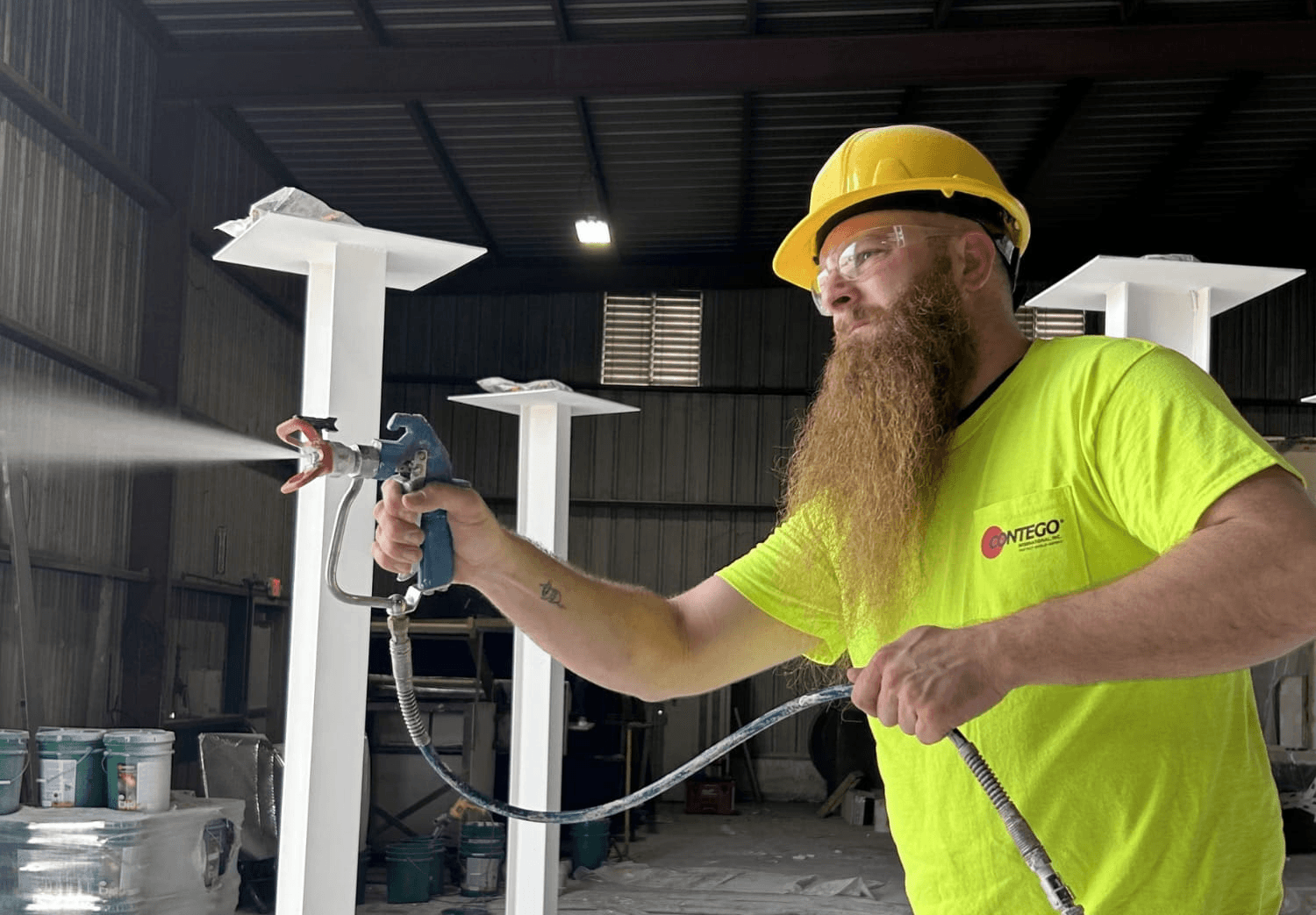
How Traditional Spray-Applied Fireproofing (SFRM) Works
Cementitious fireproofing is a slurry or fiber mix that is applied directly to bare or primed steel surfaces to act as a thermal insulator. The material slows conductive heat transfer, keeping structural steel below its critical failure temperature of approximately 538°C (1000°F).
Typical SFRM compositions include:
Portland or gypsum cement as the binder
Lightweight aggregates such as vermiculite, perlite, or quartz
Mineral wool or fiberglass fibers for structural integrity
Chemical hardeners and accelerators for adhesion and set time
SFRM is commonly supplied as a dry powder, mixed with water on-site at ratios around 3:1 to 4:1, then applied using wet or dry spray equipment. Dry mix SFRM is pneumatically moved through a hose with atomized water added at the nozzle, making it suitable for severe weather conditions. Required thickness ranges from 3/8 inch to over 3 inches depending on hourly ratings and steel section size per UL/ULC specifications.
How SFRM protects during a fire:
Endothermic dehydration absorbs heat as moisture converts to steam
The resulting vapor barrier slows heat transfer to the substrate
Fiber reinforcement maintains structural integrity and prevents spalling
Density classifications determine where each product fits. Low density SFRMs suit concealed interior steel, medium density products serve mechanical rooms, and high density formulations protect exterior steel and parking garages where impact resistance matters. The physical properties of SFRM, such as density, impact resistance, and hardness, play a critical role in its performance and compliance with building codes. Various factors—including material type, application method, environmental conditions, and design requirements—impact the effectiveness, adhesion, and selection of fireproofing materials. Application of fireproofing materials should always follow the manufacturer's recommendations, with careful attention to substrate preparation and environmental conditions to ensure proper adhesion and fire ratings.
While water-based intumescent coatings may involve higher application labor—particularly in multi-coat systems—overall project costs should be evaluated holistically. Cementitious fireproofing materials are often lower in initial material cost but can require increased thickness, additional passes, and jobsite coordination that impact total installation cost. Intumescent coatings, by contrast, offer thinner film builds, reduced jobsite disruption, and the ability for off-site application in certain cases, which can offset labor considerations. Additionally, optimizing steel member sizing can further reduce fireproofing requirements and contribute to overall project efficiency.
Health and Safety Hazards of Conventional Cementitious and Fibrous SFRM
While modern SFRM is asbestos-free by regulation, significant worker exposures occur during mixing, spraying, scraping, and cleanup operations. Understanding these hazards is critical for any contractor evaluating spray fireproofing options.
Common exposure sources on job sites:
Activity | Primary Hazard |
|---|---|
Bag cutting and dumping | Respirable crystalline silica |
Mixing dry powder | Silica and cement dust clouds |
Spray application | Fiber rebound and overspray |
Trimming and patching | Airborne fibers and dust |
Cleanup without HEPA | Resuspended particles |
Crystalline silica is present in many cementitious mixes and sand-based primers. OSHA’s 2016 respirable silica rule sets an 8-hour TWA limit of 50 µg/m³, with field studies showing peak exposures during mixing can reach 500–2,000 µg/m³ without proper controls. When proper engineering controls and PPE are implemented, exposures are effectively managed in accordance with OSHA standards.
Mineral wool and other fibrous materials cause skin, eye, and respiratory irritation. Fibers larger than 5µm aerodynamic diameter can evade the body’s mucociliary clearance, requiring proper PPE.
Legacy asbestos risk remains in buildings constructed before 1980. Testing and abatement under EPA and OSHA regulations is mandatory before disturbing any sprayed fire resistant material of unknown composition.
Secondary hazards include wet overspray creating slip risks, mold growth in porous SFRM exposed to moisture, and underfilm corrosion when inadequate preparation allows water infiltration.
Regulations, Codes, and Testing Standards for Spray-On Fireproofing
Both SFRM and intumescent coatings must comply with building and fire codes, tested to recognized standards that verify performance under real fire conditions.
Primary fire endurance tests:
ASTM E-119 and UL 263 establish the time-temperature curve for determining hourly ratings
Assemblies are classified as restrained or unrestrained, affecting required thickness specifications
SFRM-specific testing includes:
ASTM E-605 for density verification (±15% tolerance)
ASTM E-736 for adhesion and cohesion strength
UL fire resistance design numbers (e.g., 700–899 series for beams) specifying exact thickness and density per steel size
IBC 2018 and 2021 Section 704 establishes fire resistance rating requirements, while Section 704.13 addresses applied fire resistive materials directly. Bond strength minimums range from 150 psf for buildings under 75 feet to 1,000 psf for high-rise construction.
For restrained vs. unrestrained assemblies, the structural engineer must document which classification applies—this directly impacts required SFRM thickness and must appear on project plans.
Modern intumescent coatings, including Contego systems, are tested and listed to ASTM, UL, and ULC. A building official reviewing these materials should reference tested assembly designs, not just dry film thickness.
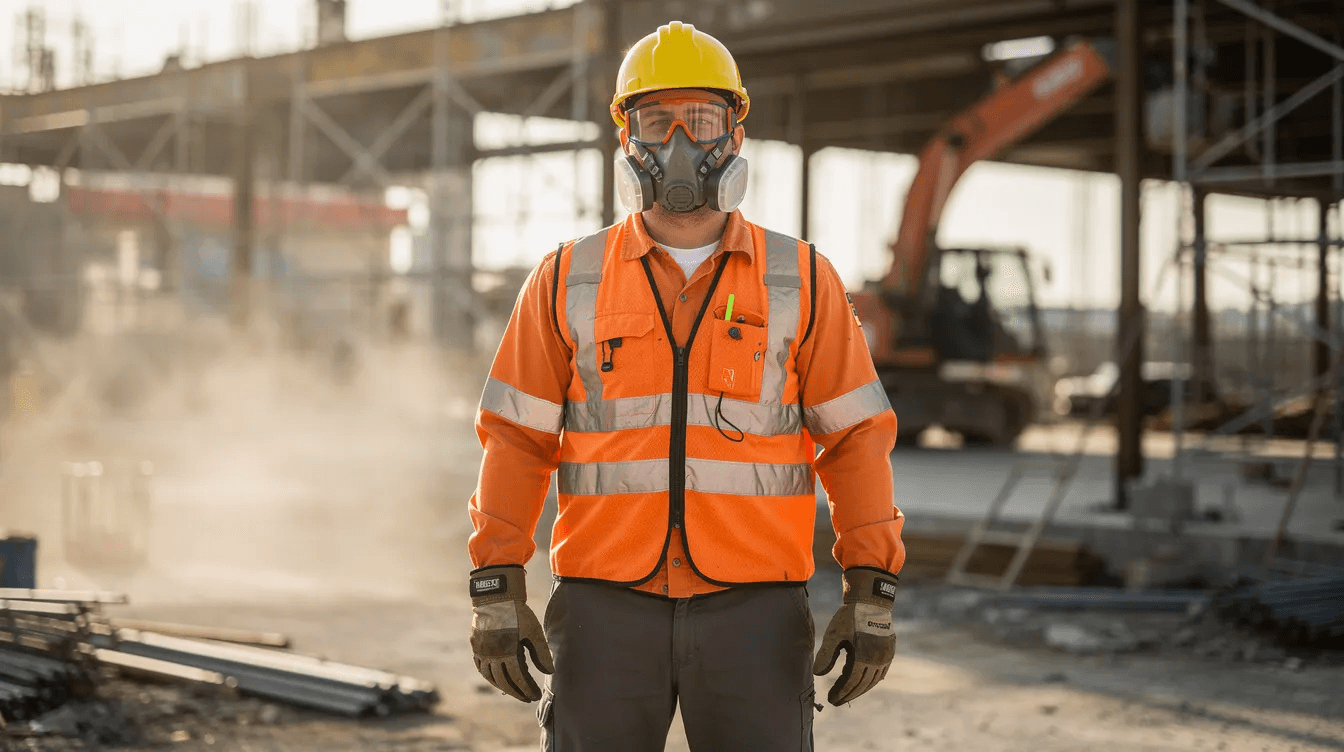
Safe Work Practices for Cementitious and Fibrous Spray-On Fireproofing
SFRM can be installed safely when contractors follow industrial hygiene controls, manufacturer instructions, and proper safety standards.
Engineering controls:
Local exhaust or shrouded mixing stations to capture dust at source
Negative air in enclosed areas with minimum 4 air changes per hour
Wet suppression methods where feasible to add air moisture and reduce particulates
Required PPE per OSHA 29 CFR 1926.1153:
NIOSH-approved respirators with P100 filters for silica and fibers
Safety goggles or face shields
Nitrile gloves and disposable coveralls
Long sleeves to limit skin contact
Administrative controls:
Silica competency training for all workers
Limiting personnel in active spray zones
Scheduling dusty work when fewer trades are present
Enforcing no eating or drinking in work areas
Jobsite preparation should cover adjacent surfaces and equipment, verify substrate readiness, and confirm ambient conditions meet minimum 40°F with adequate ventilation before spray application.
During curing, keep other trades off freshly applied SFRM, protect materials from moisture damage, and coordinate access to avoid impact that requires patching.
Intumescent Spray Fireproofing: A Cleaner, Safer Alternative
Intumescent fireproofing consists of thin-film, paint-like coatings that expand into an insulating char when exposed to fire. At approximately 200–250°C, the coating undergoes a chemical reaction that foams and expands 30–100 times its original thickness, forming a stable barrier that protects steel structures and other materials for the rated period. Intumescent coatings provide a smooth, paintable finish and do not dust or flake.
Key differences from traditional SFRM:
Factor | Cementitious SFRM | Intumescent IFRM |
|---|---|---|
Applied thickness | 3/8” to 3”+ | 18–350 mils DFT |
Surface finish | Rough, typically concealed | Smooth, can remain exposed |
Airborne dust | High during mixing/spray | Minimal |
Silica exposure | Significant risk | Generally absent |
Rebound waste | 20–40% | Under 10% |
The added benefit for contractors: intumescent systems create cleaner jobsites with reduced containment requirements. These coatings suit labs, clean rooms, data centers, and any project where protecting sensitive equipment from dust matters.
High-density SFRM is suited for harsh environments, such as parking garages and industrial units, and is very durable and moisture-resistant. Certain fiber-based sprays provide significant sound-dampening and thermal R-value insulation.
Intumescent applications still require proper ventilation, PPE, and handling precautions for waterborne or solvent-based formulations—but particulate inhalation hazards are substantially lower than conventional SFRM. For optimal fireproofing results, it is essential to ensure a complete spray application, fully covering all surfaces and patching as needed.

Contego Intumescent Fireproofing Systems for Modern Projects
Contego International, Inc. is a U.S.-based manufacturer specializing in intumescent fire barrier coatings for a full range of substrates: steel, wood, concrete, and spray polyurethane foam.
Contego offers two core formulations:
Original Formula for fire-retardant applications on interior combustible substrates
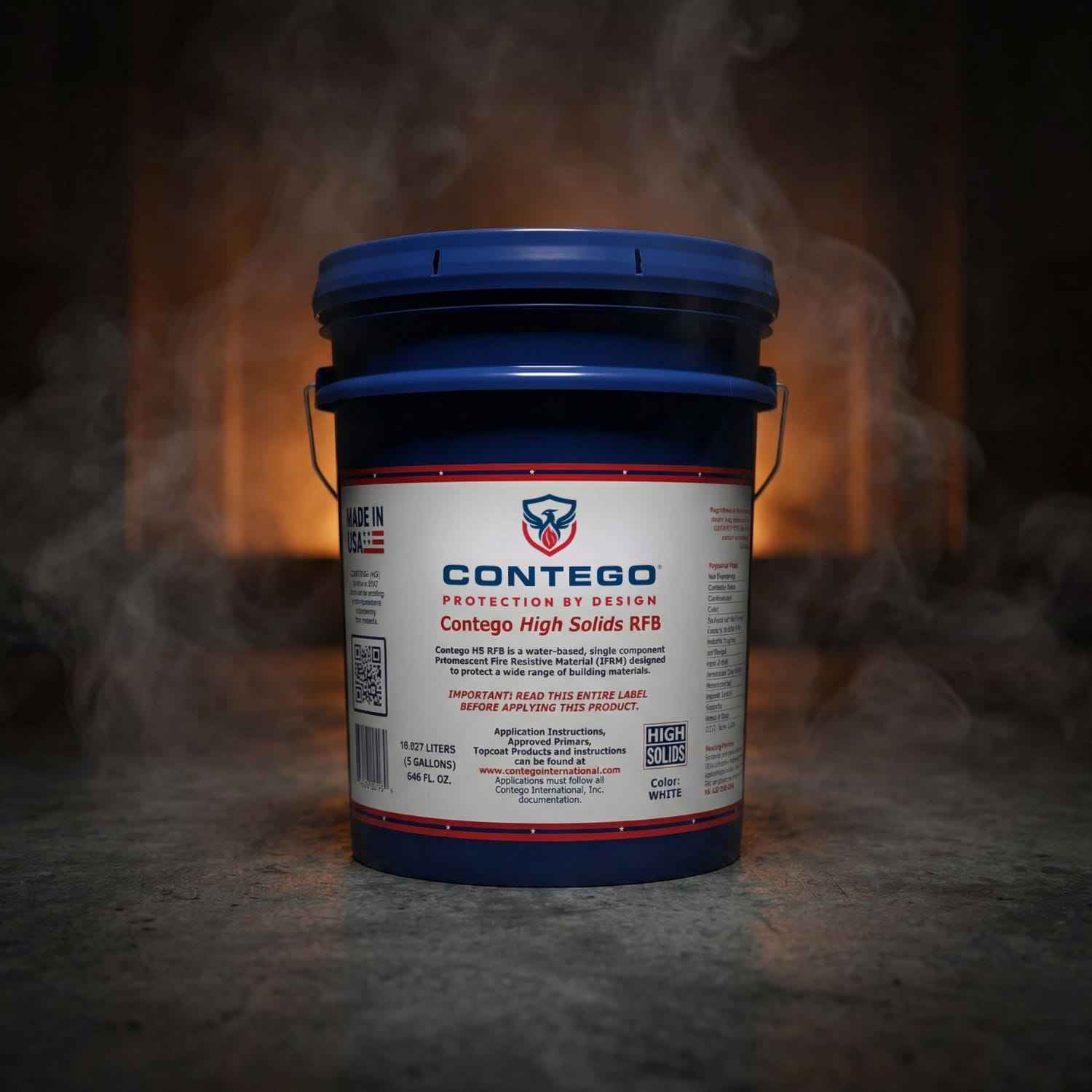
High Solids RFB engineered for structural steel, supporting assemblies with tested fire-resistance ratings
The High Solids system is tested and listed to ASTM, UL, and ULC, supporting 1- to 3-hour fire-resistance ratings in commercial, industrial, and institutional construction. Both products can be applied by spray or roller in field or shop environments, producing thin-film profiles that integrate with architectural design.
Contego provides detailed product data sheets, application guides, and primer compatibility information. Technical support extends to architects, specifiers, and code officials navigating IBC compliance and local requirements.
For projects where jobsite cleanliness and worker safety factor into your fireproofing decision, review Contego’s intumescent coating documentation, request test reports and UL/Intertek designs, or contact the technical team to evaluate whether this solution fits your upcoming specifications.
Contego High Solids
Recent Posts:
Two Solutions, One Purpose.
Fire Protection That Performs
Contego offers two distinct reactive coating technologies: one engineered for fire-resistance ratings on structural steel, and another designed for flame spread reduction on combustible substrates.
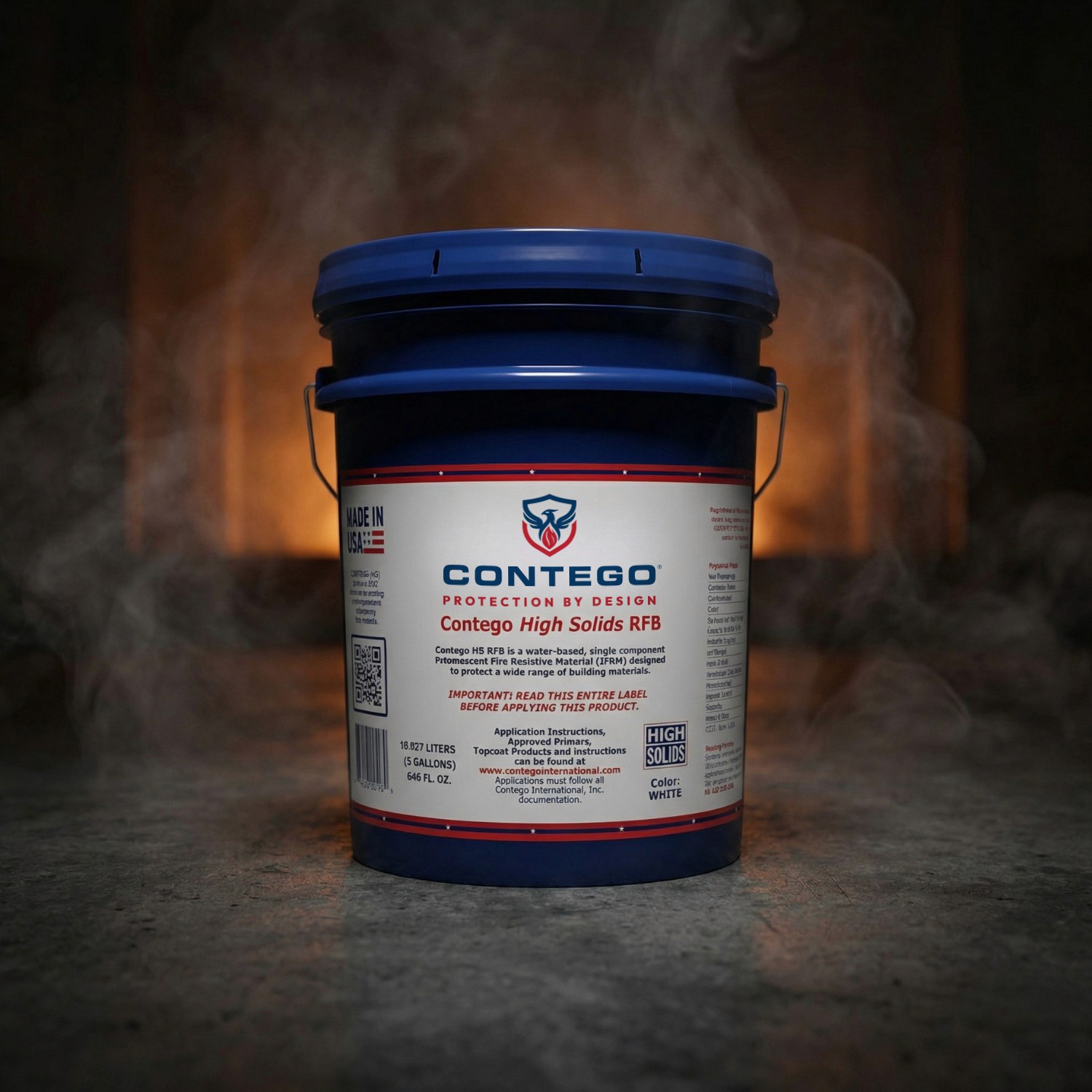
The Best in Fire Resistance
Thin-Film Intumescent Fire Protection for Structural Steel Contego listings protect a wide range of steel section factors, giving engineers greater flexibility across different structural shapes.
Key benefits:
Thin-Film Fire Protection
Low DFT Requirements
Broad Section Factor Coverage (W/D)
LEED v4, v4.1, and v5 Support
Tested Up to 3-Hour Ratings
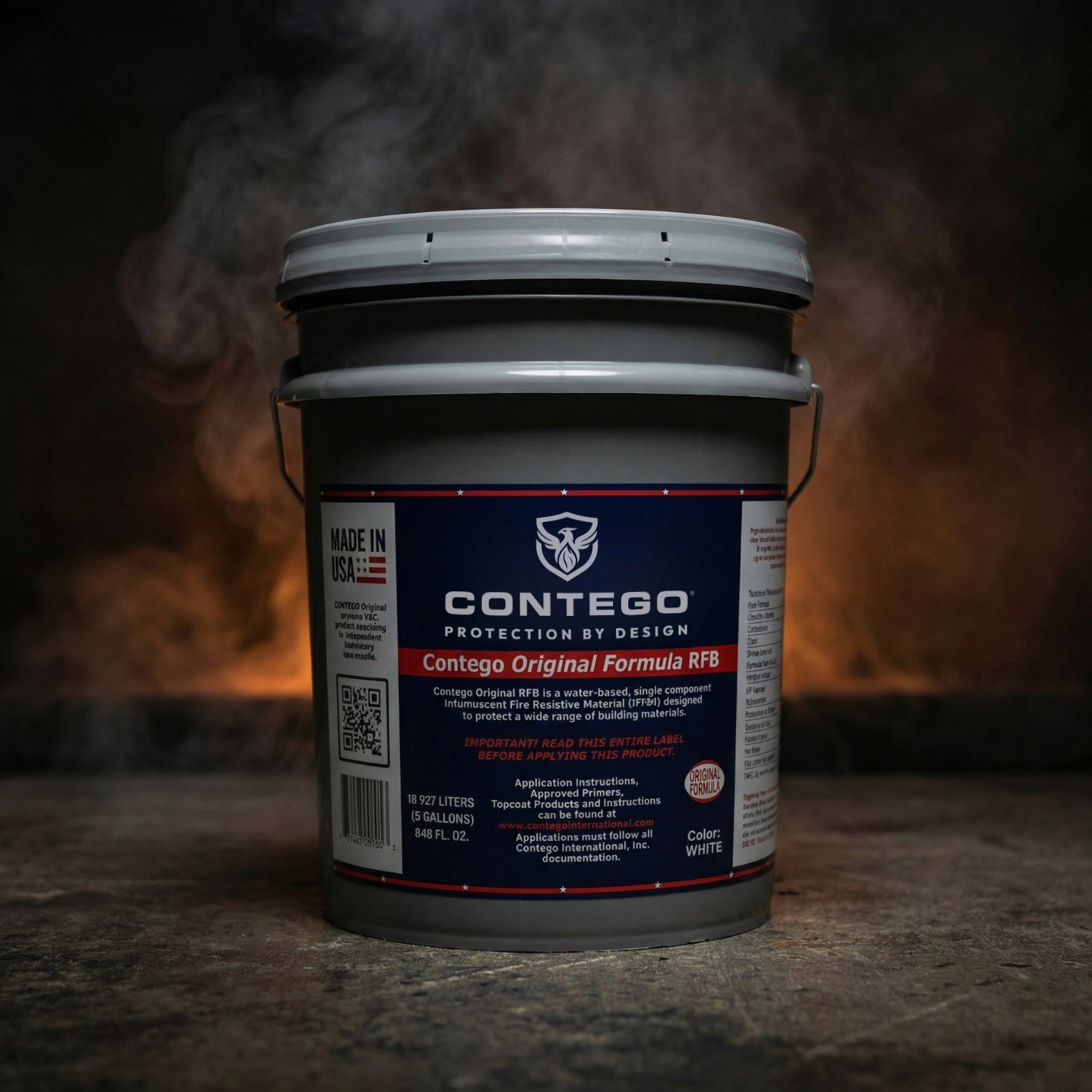
The Best in Fire Retardants
Fire Retardant Protection for Interior Building Materials Designed to improve the surface burning performance of common interior materials such as wood, foam, and SIP panels.
Key benefits:
Class A Fire Retardant Performance
Protects Multiple Interior Substrates
Smooth Architectural Finish
Zero VOC / Non-Toxic
Economical Fire Protection