


What Architects Miss About Passive Fire Protection Coatings
Aug 17, 2026
Architects hear about passive fire protection coating all the time, but it still gets pushed to the end of the job. It shows up as a code box to tick, not a design tool to plan with. When that happens, you end up fighting with schedule, finish choices, and awkward fixes that nobody loves. You do not have to work that way.
We want to walk through what passive fire protection coating actually does, how it fits your design vision, and where projects often go off track. When you understand it as part of the structure and the look, not just a line in the spec, you get safer buildings and cleaner design results.
Stop Treating Fire Protection as a Design Afterthought
On many projects, fireproofing does not get real attention until late summer, right when everyone is pushing hard to hit end-of-year occupancy. Steel is up, ceilings are framed, MEP is crowding the plenum and suddenly someone asks, “Where does the passive fire protection coating fit?” At that point, options shrink fast.
When fire protection is an afterthought, teams tend to:
Value-engineer to the lowest up-front cost
Hide steel that was meant to be exposed
Accept coatings that do not match the finish story
We see the best results when architects pull passive fire protection into early design. Instead of seeing it as a necessary evil, treat it like a design ally that protects people, supports code goals, and keeps your original concept intact.
What Passive Fire Protection Coatings Actually Do
Passive fire protection coating is not just “fireproof paint.” Intumescent coatings react to heat. In a fire, they swell up, forming a thick, insulating char layer around the steel. That char slows the temperature rise, which buys time for people to get out and for the structure to stand longer.
It helps to separate this from active systems:
Sprinklers try to control or knock down the fire
Alarms warn people to leave
Passive coatings help the structure keep its strength as long as possible
Fire ratings are not only about a time label. What really matters is how hot the steel gets during a test like ASTM E119 or UL 263. If steel heats up too fast, it can lose strength and deform. Intumescent coatings are tested as part of complete systems, so performance is tied to:
Substrate type and thickness
Primers and topcoats
Load requirements for horizontal beams
That is why a spec that just says “intumescent paint, X-hour rating” is not enough. The system, not just the product name, is what carries the fire rating.
Design Freedom Architects Do Not Realize They Have
Many architects think they have two choices: show the steel and accept bulky wraps, or hide it behind gypsum. With the right passive fire protection coating, you can keep expressive, exposed steel and still meet your fire strategy.
Coatings can support a wide range of looks:
Smooth or lightly textured final surfaces
Tinted topcoats to match or contrast adjacent finishes
Low-VOC options to support indoor air quality goals
Thin-film intumescent systems are designed to deliver high ratings with minimal thickness. That means you can:
Keep clean lines on beams and columns
Protect ceiling heights and daylighting
Maintain long views in lobbies, concourses, and open offices
You are not stuck with clumsy fireproofing that ruins your sections. When you plan early, passive coatings can stay almost invisible while doing serious work in a fire.
Code Compliance Is the Floor, Not the Ceiling
Code gives you the minimum fire resistance rating based on occupancy and construction type. It is easy to read the tables and move on. But when you stop at the letter of the rule, you can miss the bigger picture of how the building will behave when it is full of people and contents.
Thoughtful design looks at:
Expected fire load in each space
How far people travel to exit
How compartments limit or slow fire spread
Summer and holiday travel periods are a good reminder. Hotels, airports, and transit hubs may be under more stress, with higher occupancy and more luggage, bags, or retail stock. In those places, a passive fire protection coating strategy that simply meets the bare minimum might not match your comfort level for real-world performance.
Early coordination with your fire engineer helps. When your egress plans, compartment lines, and passive coatings are aligned from the start, you get a clearer story of how the building will respond under stress, not just how it looks on a code summary sheet.
Coordination Pitfalls That Derail Coating Performance
Even a well-chosen passive fire protection coating can underperform if it is not detailed and coordinated. Trouble often shows up at:
Beam and column connections
Penetrations and attachments
Complex shapes, trusses, and transfer girders
If these are not drawn and specified clearly, crews may skip or thin out coating in hard-to-reach spots. Those weak points can become the path for heat to reach the steel.
Sequencing is another problem, especially during late-summer rush periods. If coatings go on after MEP, workers may damage the finish while hanging ducts or cable trays. If coatings go on too early, later trades might scrape or overspray them when ceilings, walls, or finishes are installed.
Good documentation helps keep everyone on track:
Clear schedules listing which members get which rating
References to tested designs and assemblies
Notes on surface prep, compatible primers, and approved topcoats
When the drawings tell a complete story, the field team is more likely to deliver the performance you specified.
Cost and Schedule Myths That Hurt Your Projects
A passive fire protection coating is often labeled “too expensive” without looking at the full picture. When you box in steel or change the structure to avoid coatings, you may add complexity in framing, extra layers of materials, and more labor hours. A simple, coated member can be a cleaner solution.
There are also smart ways to protect your schedule. If you lock in coating choices early, you can plan for:
Shop-applied primers that work with the intumescent system
Clear inspection points before steel leaves the shop
Field work that avoids peak congestion in tight ceilings
Passive coatings also pay off over the life of the building. Quality systems are designed to handle normal wear with basic maintenance. When the building use changes, coated steel is easier to adapt than heavy boxed-in assemblies that must be opened and rebuilt.
How Contego Helps You Design Without Compromise
At Contego International, we focus on high-performance intumescent and passive fire protection coatings for structural steel and other building components. Our work supports code-compliant fire safety without forcing you to hide the structure or give up the visual story you care about.
When architects bring us into the design phase, we help with coating selection, thickness strategies, and finish systems that match the look you want. We provide guide specifications, tested assemblies, and clear submittal tools so your details line up with how the coatings are actually installed and inspected in the field.
As you move projects from concept to detailing, it is worth taking a fresh look at where passive fire protection coating is just a placeholder and where it could be doing more for both safety and design intent. With the right planning and the right partners, you do not have to choose between strong fire performance and the architecture you set out to build.
Protect Your Building With Proven Fire Safety Solutions Today
Safeguard your project with our tested and trusted passive fire protection coating designed to help meet code requirements and enhance occupant safety. At Contego International, we work with you to select the right system for your substrate, environment, and performance goals. Reach out so we can review your plans, specifications, and timelines together. To discuss your project with our team, please contact us today.
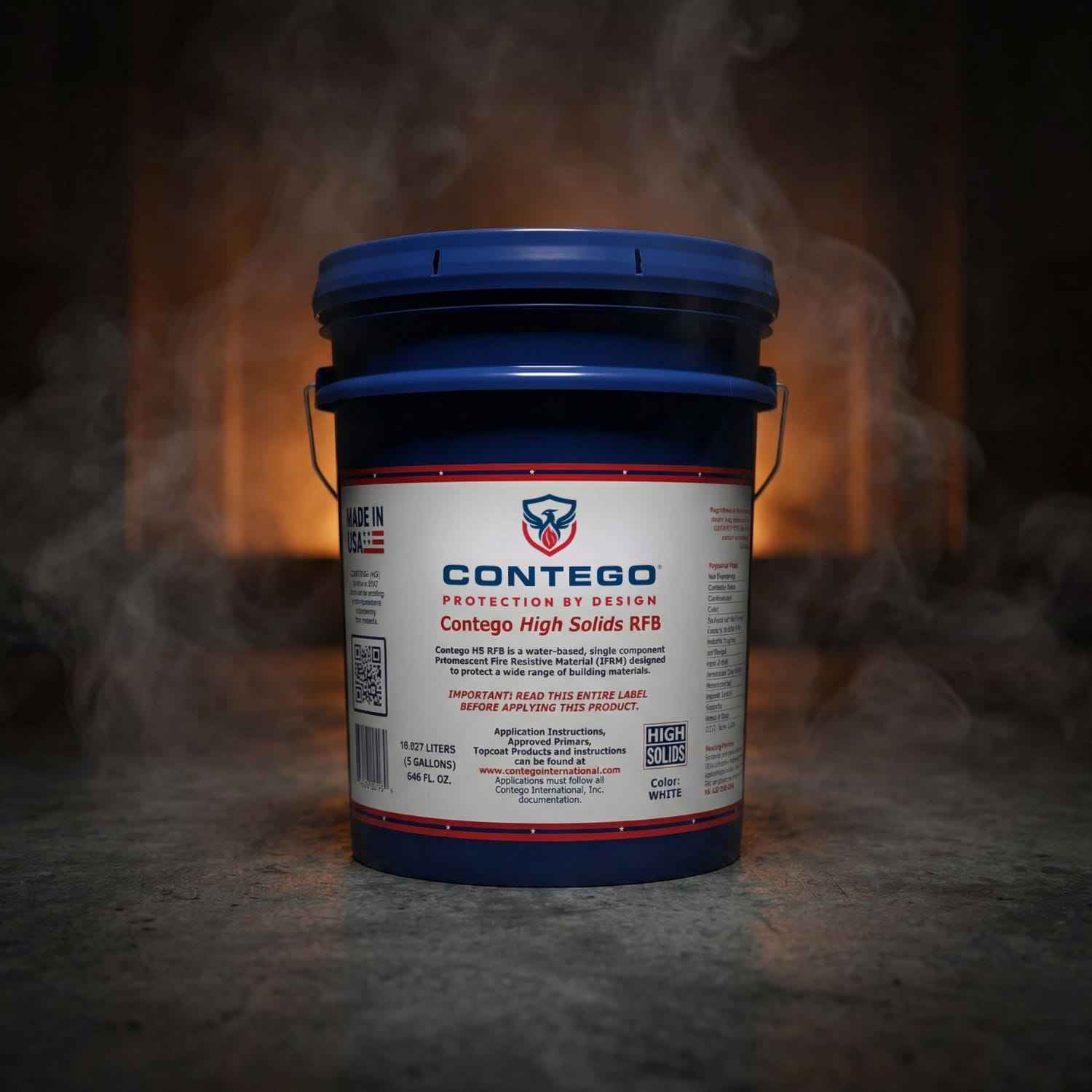
Contego High Solids
Recent Posts:
Two Solutions, One Purpose.
Fire Protection That Performs
Contego offers two distinct reactive coating technologies: one engineered for fire-resistance ratings on structural steel, and another designed for flame spread reduction on combustible substrates.
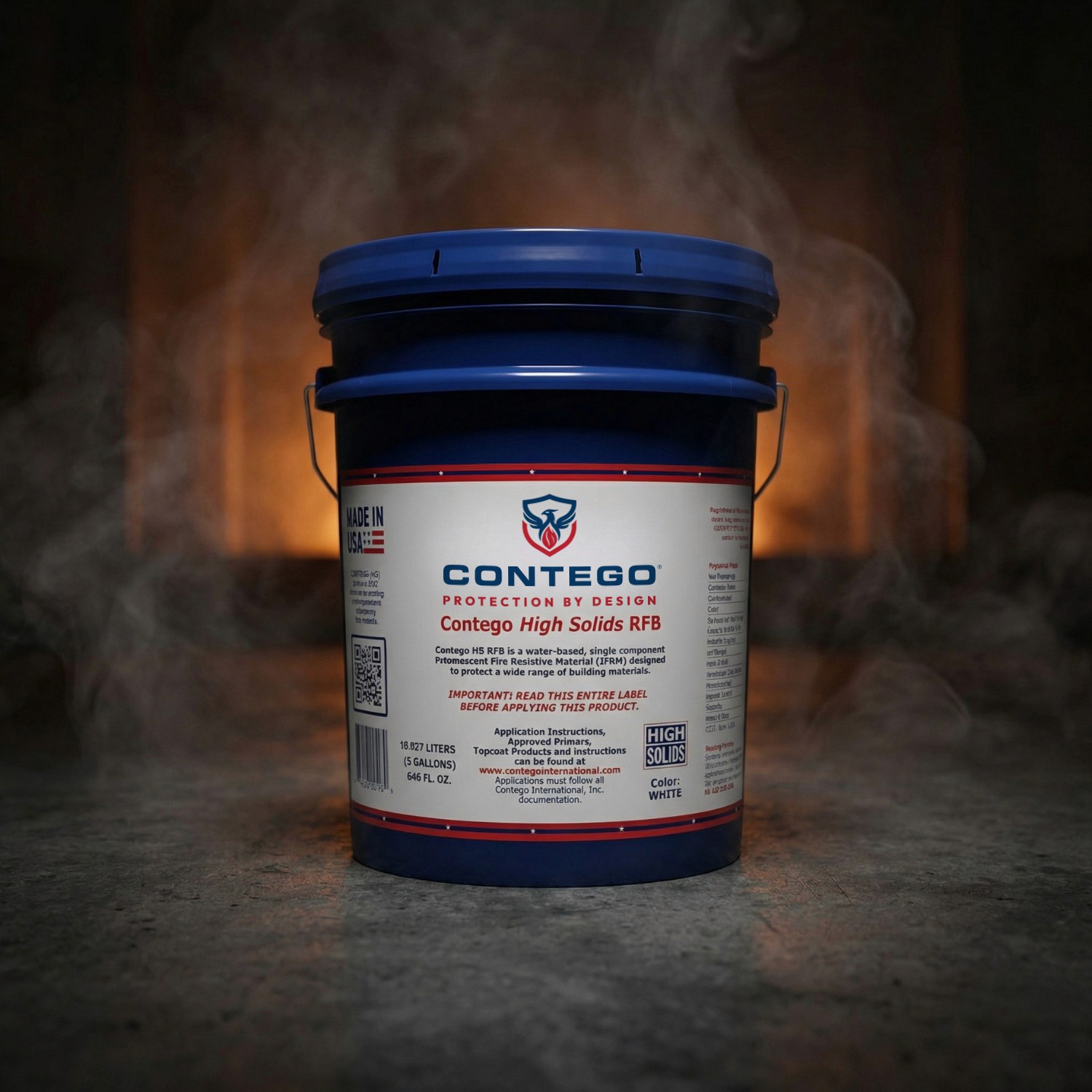
The Best in Fire Resistance
Thin-Film Intumescent Fire Protection for Structural Steel Contego listings protect a wide range of steel section factors, giving engineers greater flexibility across different structural shapes.
Key benefits:
Thin-Film Fire Protection
Low DFT Requirements
Broad Section Factor Coverage (W/D)
LEED v4, v4.1, and v5 Support
Tested Up to 3-Hour Ratings
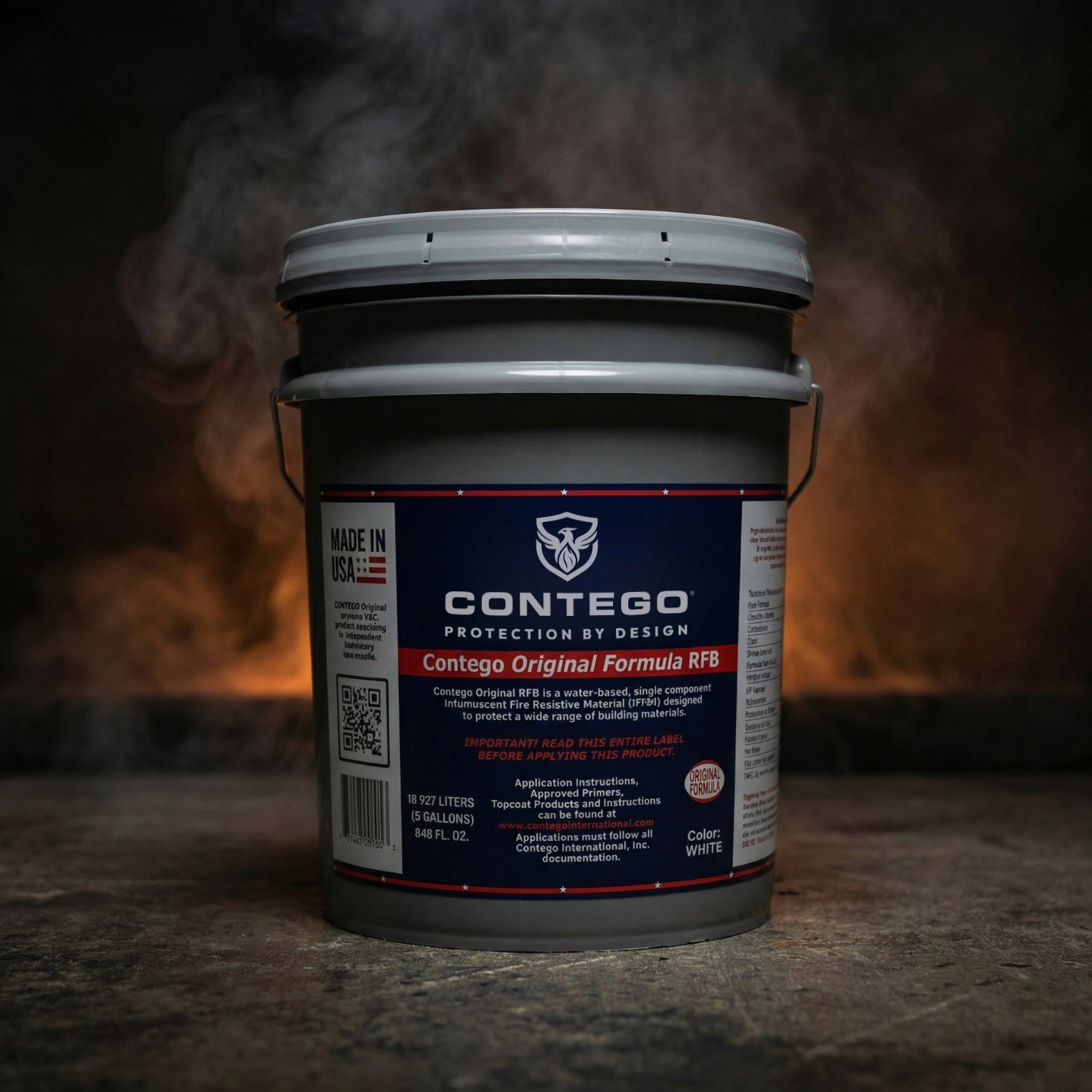
The Best in Fire Retardants
Fire Retardant Protection for Interior Building Materials Designed to improve the surface burning performance of common interior materials such as wood, foam, and SIP panels.
Key benefits:
Class A Fire Retardant Performance
Protects Multiple Interior Substrates
Smooth Architectural Finish
Zero VOC / Non-Toxic
Economical Fire Protection