

When Spray-Applied Fireproofing Limits Your Design Options
Jul 20, 2026
Design Freedom Starts with the Right Fireproofing Choice
Spray-applied fireproofing can do its job, but it can also quietly rewrite your design. A clean exposed steel ceiling turns into a heavy, fuzzy surface. Clear heights drop. Mechanical lines get squeezed into places they were never meant to run. The project still meets code, but it no longer looks or feels like what you drew.
Many teams pick spray-applied fireproofing by default. It is familiar, it is common, and it is often the first option that comes to mind. But default choices can limit design freedom, slow construction, and create long-term headaches. When we stop and question that default, new solutions come into view.
In this article, we look at how traditional spray-applied fireproofing can shape your building more than you think, where the hidden costs show up, and how thin film intumescent coatings can protect your structure without forcing you to give up your design intent.
How Spray-Applied Fireproofing Shapes Your Building Form
Spray-applied fireproofing adds a lot of bulk. Cementitious and fibrous sprays can increase the depth of a beam or column by several inches on all sides. That may not seem like much on paper, but it adds up fast in real space.
In open, airy same projects like schools, airports, or cultural spaces, those extra inches can:
Reduce clear ceiling height
Change proportions of exposed steel
Clash with skylights, clerestories, or tall glazing lines
That slim steel web you wanted to show off often disappears inside a padded shell. The structure stops reading as steel. It reads as a thick, gray mass.
Then there are tolerances. Spray is not a crisp, factory finish. It is applied in the field, often in warm, humid weather. That can mean:
Uneven thickness from one bay to the next
Overspray on decks, ducts, or nearby finishes
Messy edges at connections, façade interfaces, and soffits
These issues do not just affect looks. They affect detailing. Suddenly, you are reworking shop drawings to allow for more buildup around beam ends. Brackets and clips need more offset. Curtain wall anchors have to shift to clear the spray. Small changes snowball.
Coordination with MEP systems becomes another challenge. Sprayed fireproofing can interfere with:
Duct and pipe routing in tight plenum spaces
Cable trays and lighting layouts
Daylighting strategies that rely on clean, open trusses
When the fireproofing shows up late in the sequence, teams may be forced to move lines, drop ceilings, or adjust diffuser locations. Performance can still be met, but the space loses some of the clarity and simplicity you were aiming for.
Hidden Costs of Conventional Spray-Applied Fireproofing
The first cost you see with spray-applied fireproofing is time. Application is sensitive to weather, especially in peak summer heat and humidity. If conditions are outside the recommended range, crews may need to slow down, apply in thinner passes, or return later for extra coats and patching.
Those delays ripple through the schedule. Other trades wait for sprayed areas to cure. Sequencing becomes more complex. Access for touch-ups around installed systems can be harder and slower to set up, especially when equipment is already in place.
There are also lifecycle costs that are easy to overlook:
Extra dead load on the structural frame
Damage from impact in busy or exposed areas
Repeated repairs where the coating cracks, chips, or peels
In parking levels, loading zones, or public spaces, sprayed fireproofing can take a beating. Each repair visit means more coordination, more protection for nearby finishes, and more disruption.
Appearance is another quiet cost. It can be tough to achieve a smooth, uniform surface on elements that people will see every day. Common problems include:
Rough or patchy texture on beams and columns
Visible cracking or delamination over time
Inconsistent transitions between sprayed and non-sprayed areas
When the structure is part of the architecture, that inconsistency does not just bother the design team. It shapes how people feel about the finished building. If the fireproofing looks sloppy in a signature lobby or gallery, it can reflect back on everyone who worked on the project.
Rethinking Fire Protection with Thin Film Intumescent Coatings
Thin film intumescent coatings take a different path. Instead of building up a thick, fuzzy layer around the steel, they create a smooth, paint-like finish that closely follows the shape of the member. The steel still looks like steel.
For architects and specifiers, this opens up options:
Exposed beams and columns with clean lines
Slim profiles where every inch of height matters
Consistent detailing at connections and interfaces
When exposed to fire, these coatings expand and form an insulating char that helps protect the steel, similar in intent to traditional sprayed systems. UL-listed intumescent systems are tested to meet strict fire rating requirements on structural steel and other approved substrates, so code compliance can be maintained without the bulk.
Because these products use a thin-film approach, they also make it easier to control the final appearance. Teams can:
Coordinate finish color with the broader palette
Aim for a uniform, architectural-grade surface
Blend structural elements into or contrast them with surrounding materials
Instead of hiding the frame behind a thick layer of spray-applied fireproofing, you keep it as a key part of the design story.
Specifying Contego Solutions for Demanding Projects
At Contego International, we focus on high-performance, architectural-grade intumescent fireproofing coatings for structural steel and other substrates. Our systems are designed for projects where design intent, clearances, and exposed steel all matter as much as the fire rating.
When you specify thin film intumescent coatings, it helps to think through:
Required fire rating and structural member sizes
Substrate type and any primers or topcoats in the system
Interior or exterior exposure and environmental conditions
UL-listed system selection is a key step. Matching the right tested assembly to your project requirements supports both performance and code compliance. In warm summer conditions, like we experience in many parts of the United States, it is also important to consider:
Temperature and humidity ranges during application
Ventilation and air movement in large interior volumes
Jobsite access, sequencing, and protection of adjacent finishes
Our role is to support architects, contractors, and specifiers from early design through construction. That includes sharing technical data, system details, and application guidelines so teams can plan clearly. When people are used to spray-applied fireproofing, moving to thin film systems can feel like a big shift. We work to make that shift straightforward, not risky.
Take Back Your Design Intent with Smarter Fireproofing
Spray-applied fireproofing will always have a place, but making it the default can cost you. It can change proportions, reduce clear heights, complicate details, and create finish and maintenance issues that linger long after opening day. Those tradeoffs are easy to miss when you are focused only on meeting a rating.
Thin film intumescent coatings offer another path. With the right systems, you can meet strict fire protection requirements while keeping clean lines, open volumes, and carefully planned interfaces intact. Fire protection becomes part of the design, not something that works against it.
As projects grow more ambitious, it pays to treat fireproofing as a design decision, not just a checkbox. When teams look at options early, bring all stakeholders into the discussion, and consider the long-term impact on appearance and performance, they create buildings that work better and look better season after season. At Contego International, that balance between safety and design freedom is exactly what we aim to support on every project.
Get Started With Your Project Today
Protecting your building starts with the right spray-applied fireproofing strategy, tailored to your structure and code requirements. At Contego International, we work with your team to evaluate risks, recommend compliant systems, and support a smooth installation process. If you are ready to move forward or have technical questions, contact us so we can help you plan your next steps with confidence.
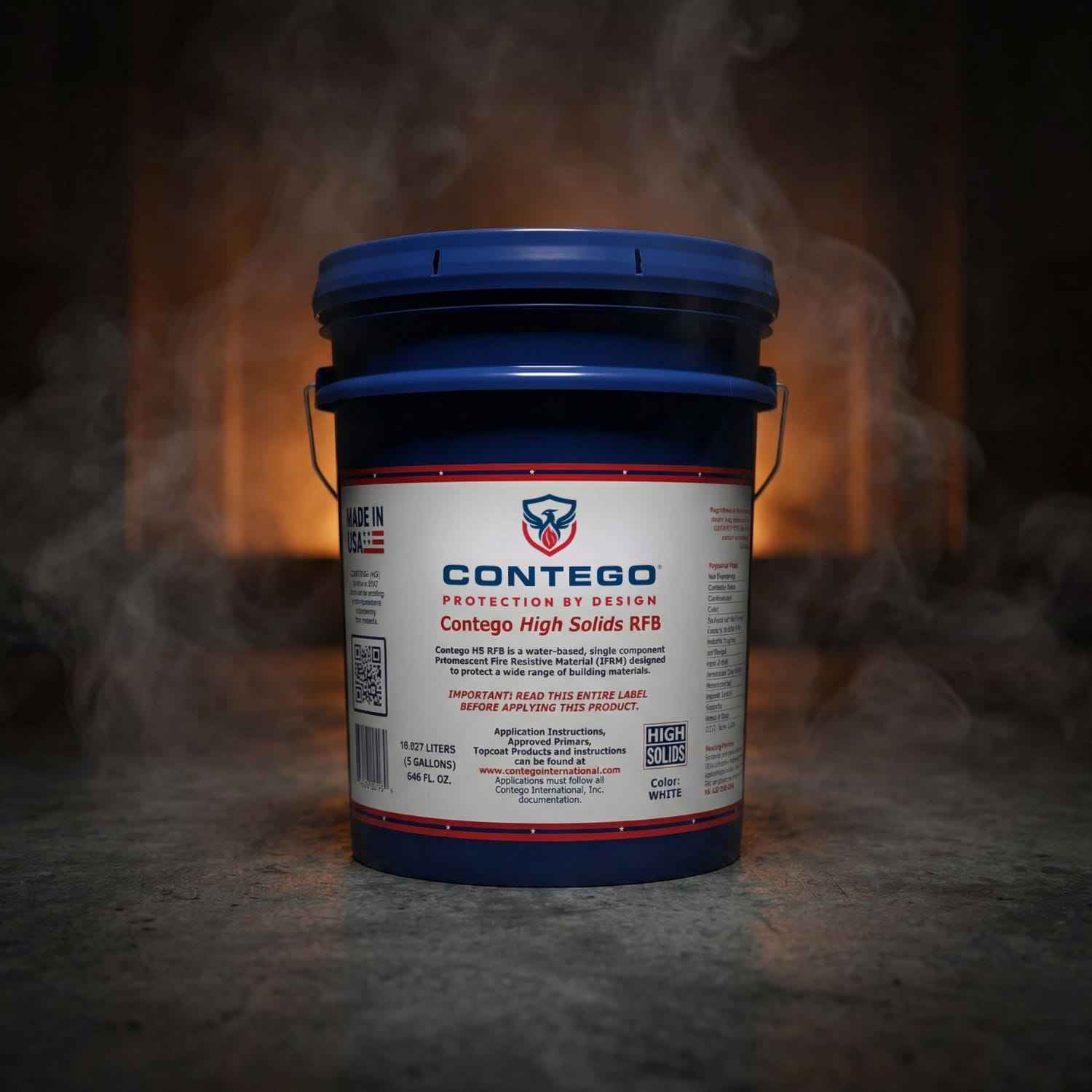
Contego High Solids
Recent Posts:
Two Solutions, One Purpose.
Fire Protection That Performs
Contego offers two distinct reactive coating technologies: one engineered for fire-resistance ratings on structural steel, and another designed for flame spread reduction on combustible substrates.
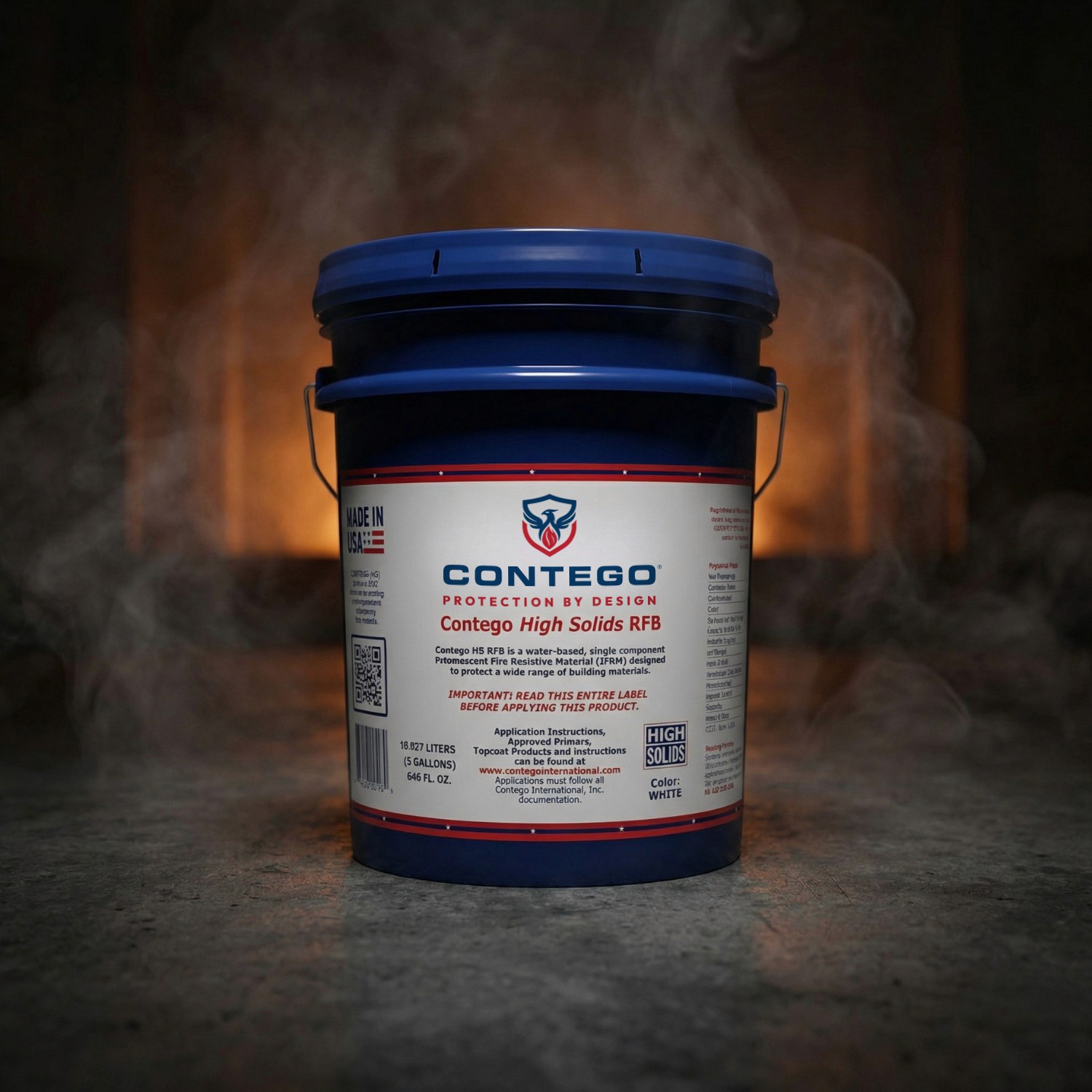
The Best in Fire Resistance
Thin-Film Intumescent Fire Protection for Structural Steel Contego listings protect a wide range of steel section factors, giving engineers greater flexibility across different structural shapes.
Key benefits:
Thin-Film Fire Protection
Low DFT Requirements
Broad Section Factor Coverage (W/D)
LEED v4, v4.1, and v5 Support
Tested Up to 3-Hour Ratings
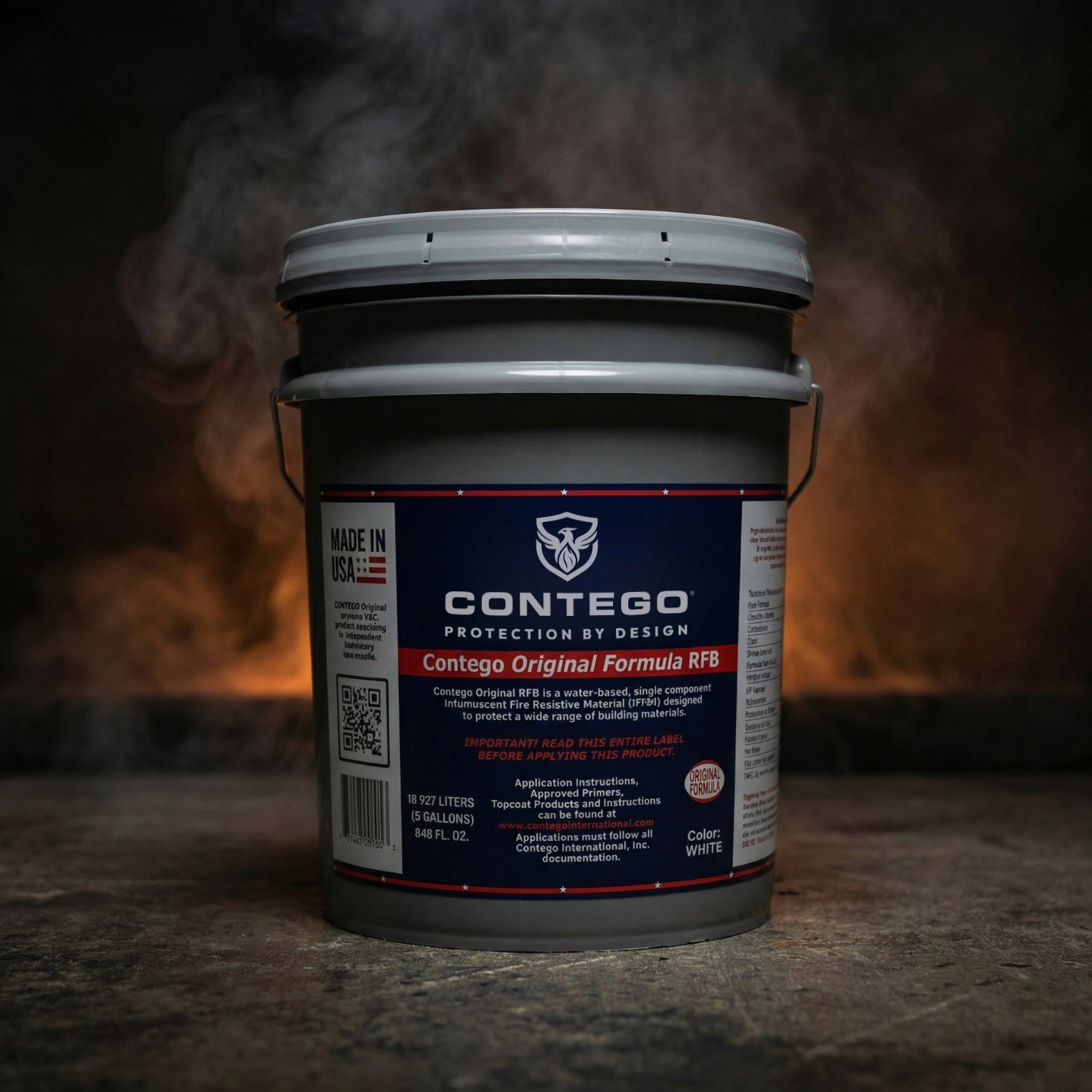
The Best in Fire Retardants
Fire Retardant Protection for Interior Building Materials Designed to improve the surface burning performance of common interior materials such as wood, foam, and SIP panels.
Key benefits:
Class A Fire Retardant Performance
Protects Multiple Interior Substrates
Smooth Architectural Finish
Zero VOC / Non-Toxic
Economical Fire Protection