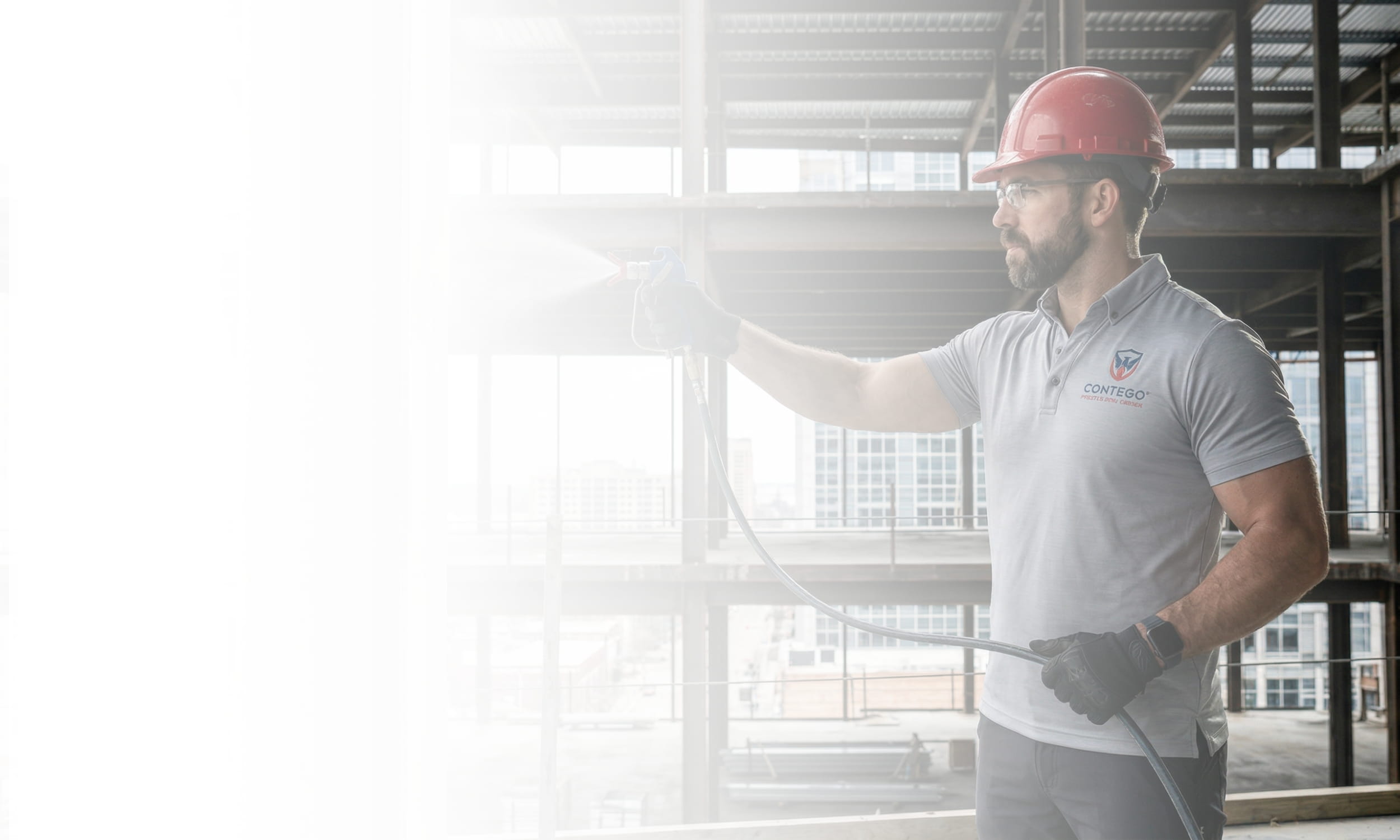
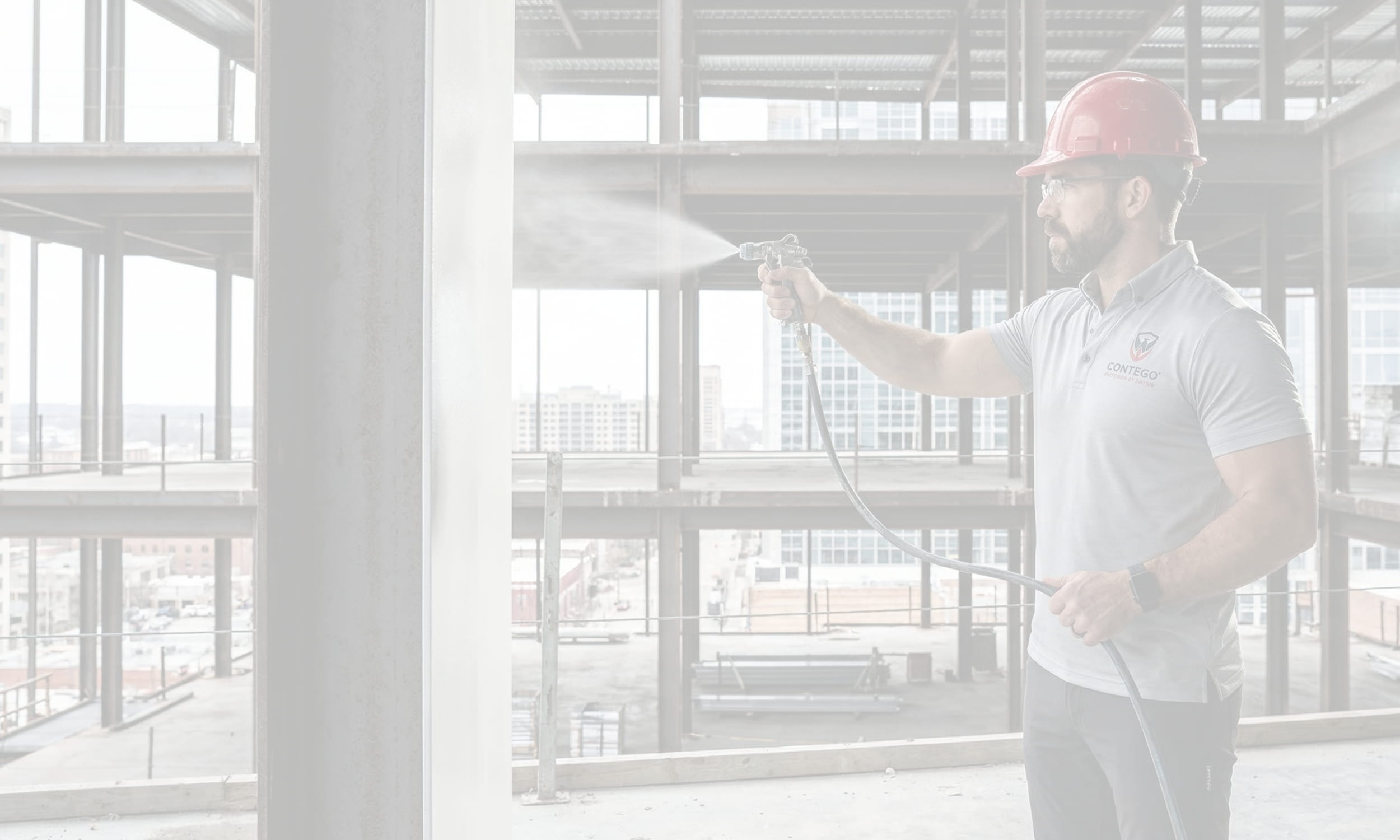
Fire-Rated Coating Failure Modes on Exposed Steel: Adhesion and Cracking
Oct 19, 2026
Architecturally exposed steel looks amazing when it is clean, sharp, and consistent. When the fire-rated coatings on that steel start peeling, cracking, or showing ugly finish issues, the whole design can feel off, and inspectors may start asking hard questions about fire protection too. This is where aesthetics, code requirements, and field reality all crash into each other.
In many modern projects, the steel is not hidden behind drywall. It is the design. That means the fire protection on that steel has to work twice as hard. It needs to perform in a fire and still look good up close, under bright lights, from long viewing distances. In this article, we walk through how and why fire-rated coatings fail on architecturally exposed structural steel, and what design teams and contractors can do to prevent the biggest problem areas.
Design-Grade Steel, Code-Grade Protection
On a high-profile job, AESS is often the centerpiece: long, clean beams in a lobby, dramatic trusses in a transit hub, or sleek columns in an open office. The expectation is simple: perfect steel, perfect finish. But when the fire-rated coating starts to peel at a connection or crack at a beam flange, nobody sees it as a small issue. It becomes a design problem, a code problem, and a schedule problem all at once.
With AESS, the surface is ultra smooth, the tolerances are tight, and the sightlines are long. Tiny ripples, sags, or color shifts stand out. If a fire-rated intumescent system fails, it is almost never just cosmetic. Loss of adhesion, deep cracking, or exposed steel can:
Compromise the tested fire rating
Trigger rework of entire bays, not just a small patch
Delay inspections and occupancy approvals
Our goal here is to help architects, specifiers, and contractors see the common failure modes early, so the team can make better choices on detailing, surface preparation, product selection, and field application.
Why Architecturally Exposed Steel Is So Unforgiving
AESS is not standard structural steel. The welds are more controlled, the grinding is cleaner, and the connections are often meant to be seen and admired. Light rakes across flanges and bolts in ways that highlight even small flaws. In fall and winter, when natural light is lower and artificial lighting does most of the work, every wave and defect in the coating becomes more obvious.
Shop and field realities add to this challenge. Even on well-run jobs, we see:
Weld spatter and grinder marks that are not fully blended
Mill scale or rust left in low spots or corners
Erection damage, touch-up primers, and field welds
Different primers from different sources on the same frame
High-performance fire-rated coatings interact with all of this. If the surface is inconsistent or contaminated, you are building a finish system on top of weak points.
Late-year completions add weather stress. Cool temperatures, high humidity, and compressed schedules in colder regions, like we see often from our base in the United States, all push teams to move faster. That can mean stretching recoat windows, coating in marginal conditions, or jumping past important quality checks. All of these choices can show up months later as failures on exposed steel.
Adhesion Failures: When Coatings Let Go of the Steel
Adhesion failure is usually the first big red flag. On AESS, it shows up as flaking at edges, peeling around welds, or sheets of coating lifting between primer and intumescent. You might also see small, hard-to-reach spots at connections where the fire-rated coating never fully bonded and can be picked off with a fingernail.
The core causes are usually one or more of these:
Poor surface preparation or the wrong blast profile
Incompatible or unknown shop primers, under the intumescent
Oils, salts, or handling contamination trapped under the film
Moisture on the steel or condensation between coats
Application in temperatures or humidity outside the product data sheet
To avoid this, we encourage teams to:
Define shop vs field responsibilities for prep and priming in clear writing
Pre-approve a full tested assembly, primer + intumescent + topcoat
Control surface profile and cleanliness, including weld areas and edges
Use on-site pull testing and wet film checks as part of a formal QA/QC plan
When everyone understands the system as a whole, adhesion problems are caught before the steel is 40 feet in the air.
Cracking, Checking, and Movement-Related Defects
Cracking is another common issue that looks bad and can affect performance. On architecturally exposed steel, it can appear as long straight cracks along the length of a member, or as tight, "alligator" mud-cracking in heavy builds. At corners, around bolt heads, and in complex connection details, you might see fine hairline fractures.
Typical drivers include:
Applying more intumescent film than the specified dry film thickness
Pushing recoat times so solvents are trapped in the lower layers
Thermal movement in exterior or semi-conditioned spaces
Different rates of expansion between steel, fire-rated coatings, and topcoats
You can reduce these risks by:
Simplifying or rationalizing connection geometry where possible
Respecting maximum wet and dry film thicknesses at every coat
Using suitable elastic topcoat systems that can move with the intumescent
Planning application around seasonal temperature swings, not just schedule
These steps let the coating breathe and flex instead of locking in stress that later shows up as cracks.
Finish Defects That Ruin a High-Design Steel Aesthetic
Sometimes the system is stuck to the steel and performing in a fire test sense, but it just does not look good. On AESS, that can be just as big of a problem. Owners and design teams often notice:
Sagging, runs, or curtains in the intumescent or topcoat
Roller or spray patterning that shows in grazing light
Pinholes, overspray lines, or patched areas that do not blend
Color or sheen variations from bay to bay
Imperfections in the steel telegraphing through otherwise smooth coatings
These finish issues usually trace back to:
Limited profiling or filling of surface irregularities before fire-rated coatings
Different application methods or equipment between trades or phases
Poor lighting during inspection that hides defects until late in the project
Skipped mockups, so nobody agreed on what "acceptable" looks like
To get more predictable results on AESS, we suggest:
Full-scale mockups under project lighting and viewing distances
Standardizing spray equipment, tips, and techniques across applicators
Using high-performance architectural topcoats for uniform color, sheen, and cleanability
When everyone has the same visual target, it becomes much easier to hold the finish to that level across the building.
Building a No-Surprises Strategy for Fire-Rated Coatings
The best way to avoid surprises is to treat fire-rated coatings on AESS as an early design decision, not a last-minute box to check. That means aligning UL-listed assemblies, primers, intumescent fire-rated coatings, and topcoats from the very start of the project. The goal is one complete system, tested and coordinated, not a stack of products that "should be fine."
We see the most success when teams put a coordination plan in place that includes:
Preconstruction meetings with the manufacturer, shop and field applicators, and the general contractor
Written application procedures that match the fire listings and product data sheets
Clear acceptance criteria for both fire performance and architectural appearance
With Contego International, our focus is on helping you protect the design you worked hard to create, while still meeting the fire-resistance ratings the building must have. When the system is chosen early, detailed well, and applied with clear checks in place, architecturally exposed steel can stay both beautiful and protected, even through the tougher fall and winter construction seasons.
Protect Your Building With Proven Fire-Rated Solutions
If you are planning a new project or upgrading an existing structure, our fire-rated coatings can help you meet code requirements while preserving your design. At Contego International, we work directly with your team to match the right products to your specific risk profile, substrates, and schedule. Share your project details and we will provide guidance on specifications, application, and compliance. To start the conversation, simply contact us today.
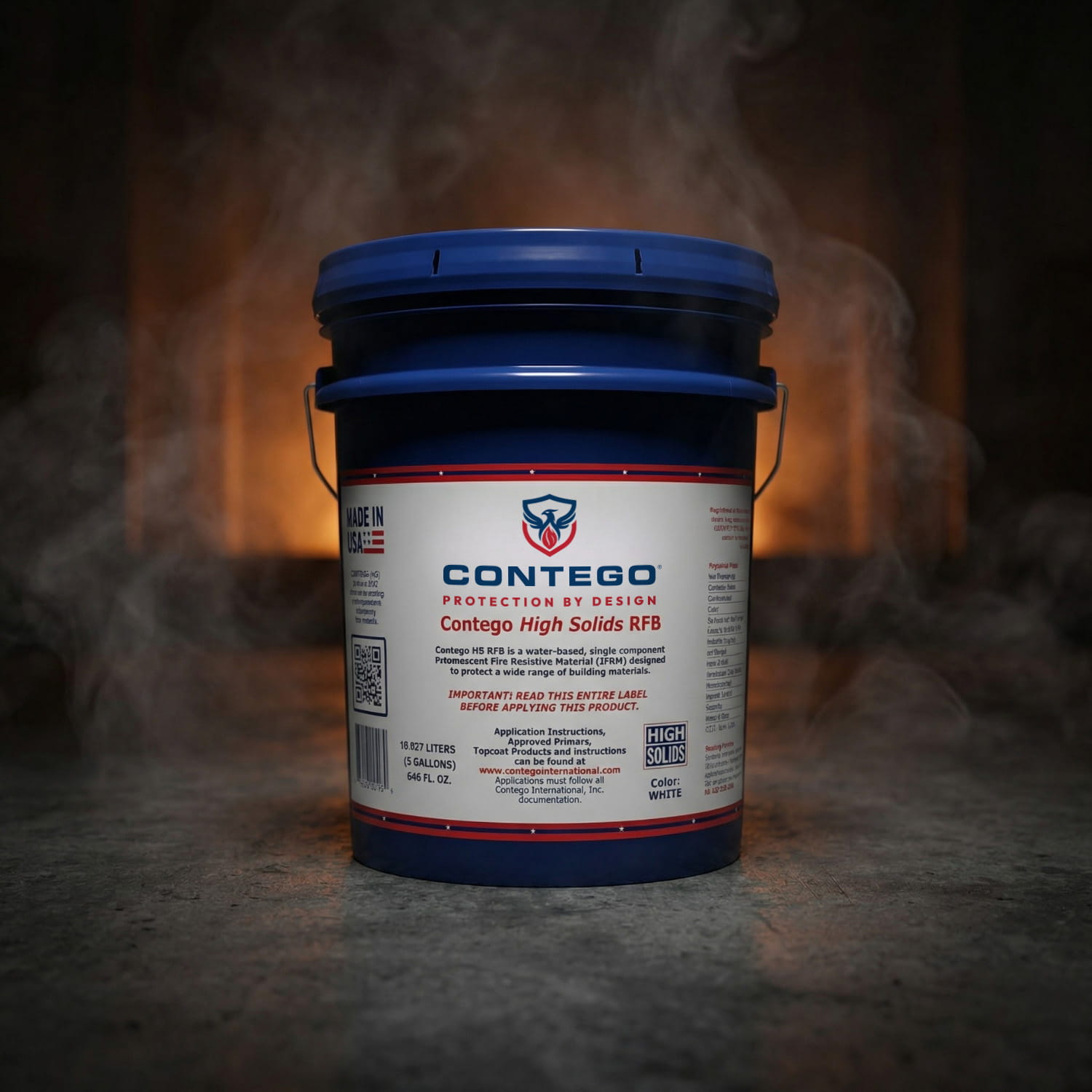
Contego High Solids
Recent Posts:
Two Solutions, One Purpose.
Fire Protection That Performs
Contego offers two distinct reactive coating technologies: one engineered for fire-resistance ratings on structural steel, and another designed for flame spread reduction on combustible substrates.
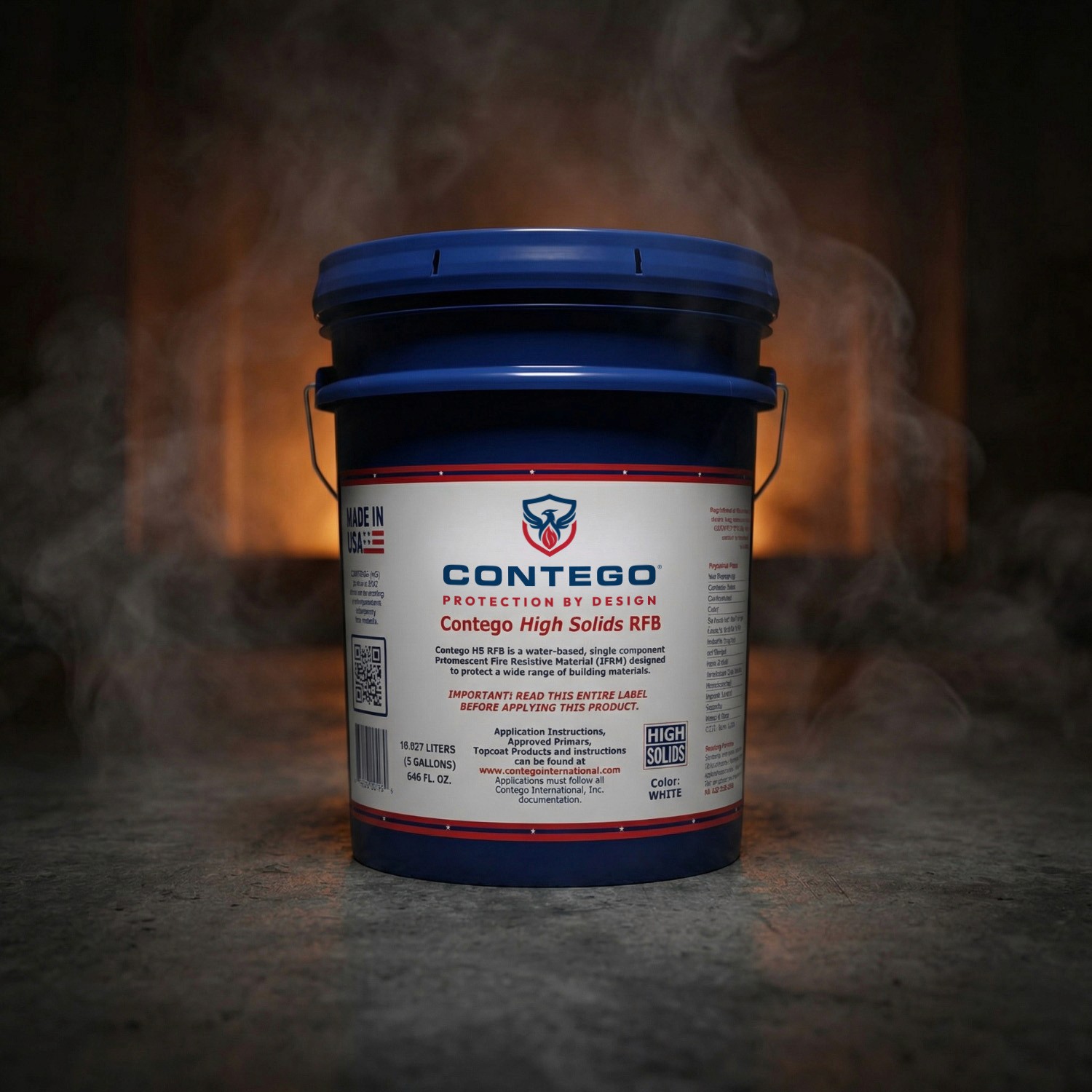
The Best in Fire Resistance
Thin-Film Intumescent Fire Protection for Structural Steel Contego listings protect a wide range of steel section factors, giving engineers greater flexibility across different structural shapes.
Key benefits:
Thin-Film Fire Protection
Low DFT Requirements
Broad Section Factor Coverage (W/D)
LEED v4, v4.1, and v5 Support
Tested Up to 3-Hour Ratings
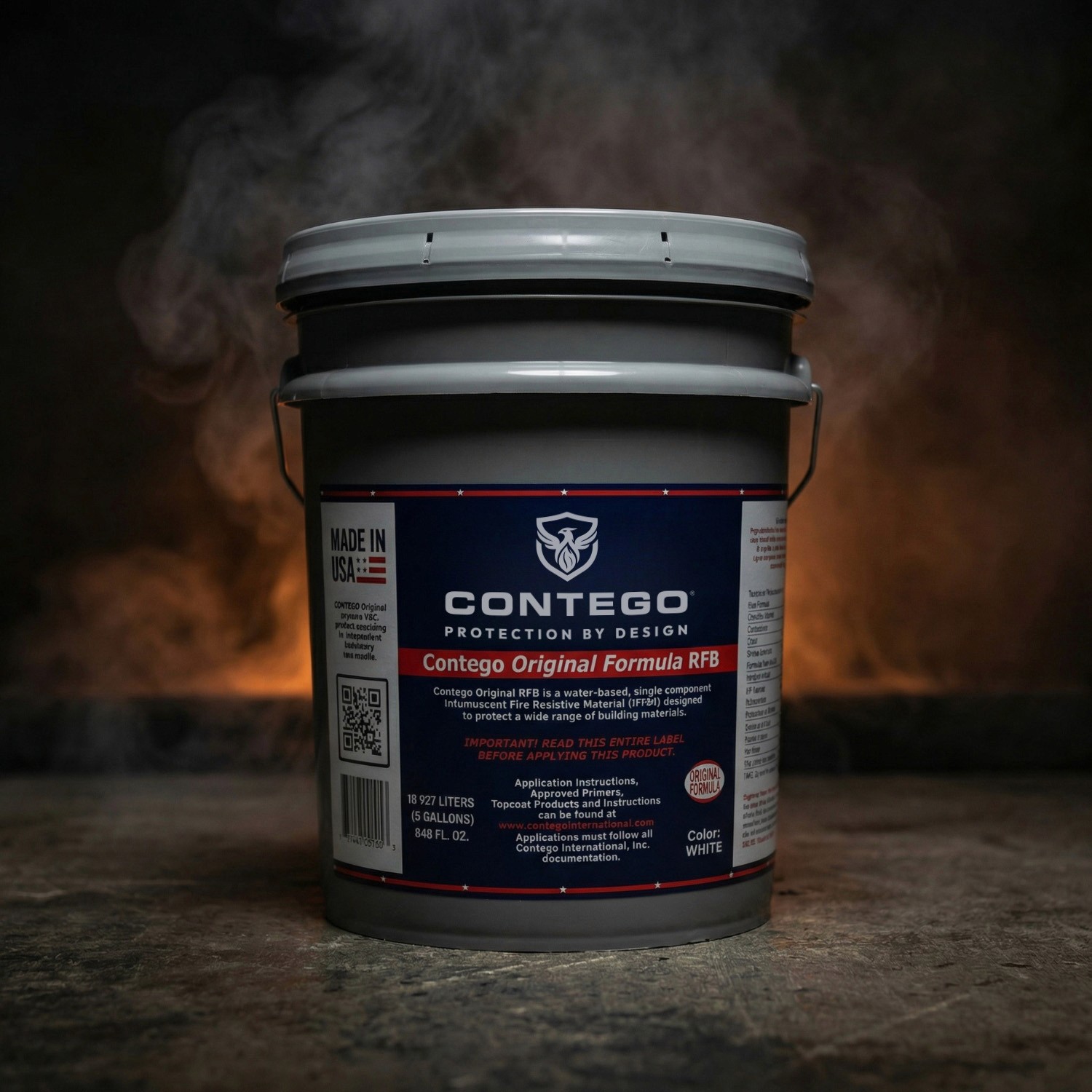
The Best in Fire Retardants
Fire Retardant Protection for Interior Building Materials Designed to improve the surface burning performance of common interior materials such as wood, foam, and SIP panels.
Key benefits:
Class A Fire Retardant Performance
Protects Multiple Interior Substrates
Smooth Architectural Finish
Zero VOC / Non-Toxic
Economical Fire Protection