

UL Listings for Fireproofing Coatings: Designs, DFT, Prep, and Pitfalls
Aug 13, 2026
Understanding UL and Intertek Fireproofing Listings
Turn Fire-Resistance Listings Into Project-Saving Clarity
UL and Intertek fire-resistance listings are far more than paperwork for the closeout binder. They determine whether your structural steel fireproofing system complies with the building code, passes inspection, and performs as intended in a fire. When projects ramp up during the busy construction season and schedules are compressed, misunderstanding a fire-resistance listing can result in costly rework, delayed inspections, and unnecessary material waste.
A UL or Intertek listing is a published fire-resistance design that documents exactly how a tested assembly must be constructed to achieve a specific fire-resistance rating. That is very different from a laboratory test report, engineering letter, or marketing brochure. A listed assembly has been evaluated, tested, and published by an accredited certification agency with specific installation requirements that must be followed.
Although many professionals use the term "UL listing" as a generic reference, Intertek listings are equally recognized by the International Building Code (IBC) when issued by an approved testing and certification agency. Both organizations publish fire-resistance designs based on recognized standards such as ASTM E119 and UL 263, and both are accepted by Authorities Having Jurisdiction (AHJs) when installed in accordance with the published listing.
This guide explains how to read UL and Intertek fire-resistance listings, determine the correct dry film thickness (DFT), verify substrate preparation requirements, and avoid common specification mistakes that can derail a project.
What UL and Intertek Listings Really Cover
A UL or Intertek listing applies to a specific assembly tested under specific conditions. It is not a blanket approval for a coating or permission to apply a product to any steel member.
Every published fire-resistance listing identifies exactly what was tested, including:
Structural member type (beam, column, joist, floor, roof, or deck)
Fire-resistance rating (1, 2, 3, or 4 hours)
Fireproofing product or coating system
Required primers or substrate conditions
Approved topcoats, where applicable
Fasteners and attachment methods
Steel section limitations such as W/D or A/P ratios
Restrained or unrestrained assembly conditions
Understanding the terminology is important.
Product refers to the fireproofing coating itself.
Assembly refers to all of the components working together, including the structural steel, deck, concrete, fasteners, primer, and fireproofing coating.
Listing refers to the complete tested assembly published by UL or Intertek.
Using a listed fireproofing coating alone does not guarantee code compliance. The coating must be installed within the exact assembly described in the published design. If a different primer, steel section, topcoat, or installation method is substituted without proper engineering justification and AHJ approval, the assembly may no longer comply with the published listing.
It is also important to understand what listings do not cover. Fire-resistance listings do not evaluate field workmanship, environmental exposure, improper surface preparation, or installation shortcuts. Those remain the responsibility of the contractor.
Before beginning any project, verify that you are referencing the current UL or Intertek listing and confirm that the exact fireproofing product is identified within the published design.
Reading UL and Intertek Designs Like a Fire Protection Professional
At first glance, published fire-resistance listings can appear complicated. Fortunately, both UL and Intertek present nearly the same technical information. Once you understand how to read one listing, the process is very similar for the other.
Begin by identifying the basic project requirements:
Required fire-resistance rating
Structural member type
Floor or roof assembly
Restrained or unrestrained classification
Next, review the technical details.
Look for:
Steel section limitations
W/D or A/P ratios
Wide-flange, HSS, pipe, or tube requirements
Required coating thickness tables
Notes regarding primers or special installation conditions
Several specification mistakes occur repeatedly during project reviews.
Common examples include:
Selecting a 1-hour listing when certain members require a 2-hour rating.
Applying a beam listing to columns.
Assuming all wide-flange members require the same DFT.
Using a steel section outside the listed W/D or A/P range.
Manufacturers invest significant time testing and publishing fire-resistance designs for specific assemblies. Those published listings should be clearly identified throughout the project specifications, submittals, shop drawings, and inspection documents.
The listing number, fire-resistance rating, structural member, and coating system should all match so the AHJ can easily verify compliance.
Determining Required DFT and Verifying Substrate Requirements
Dry film thickness (DFT) is one of the most important values in any fire-resistance listing. Required thickness is typically determined by the steel section factor—most commonly W/D for beams or A/P for columns.
Generally speaking, higher section factors require greater coating thickness because more steel surface area must be insulated for each pound of structural steel.
When reviewing a UL or Intertek listing:
Identify the required fire rating.
Locate the appropriate W/D or A/P value.
Find the corresponding DFT in the published table.
Confirm whether separate values exist for beams, columns, or other member types.
Avoid using a single blanket thickness across an entire project.
Statements such as "apply 60 mils to all structural steel" often result in unnecessary material usage on some members while leaving others under-protected.
Substrate preparation is equally important.
Published listings and manufacturer installation instructions often specify:
Approved primer types
Surface preparation requirements
Shop-primed steel limitations
Galvanized steel requirements
Approved topcoat systems
Maximum topcoat thickness where applicable
Installing a listed coating over an unapproved primer or adding decorative coatings outside the tested assembly may invalidate the published listing and create inspection issues.
Common Specification Mistakes That Lead to Rework
Many fireproofing problems originate long before material reaches the jobsite.
Some of the most common specification errors include:
Calling for "UL-rated fireproofing" without identifying a specific published listing.
Assuming only UL listings satisfy project requirements when equivalent Intertek listings may also comply with the building code.
Combining details from multiple listings into one specification.
Specifying a fixed DFT without referencing the required W/D or A/P values.
Providing beam listings while omitting column listings.
Coordination problems between disciplines also create unnecessary issues.
Examples include:
Steel fabricators using primers that are not approved within the published listing.
Architectural finish schedules allowing topcoats that were never evaluated with the fireproofing system.
Fireproofing submittals that omit listing numbers or complete assembly information.
A few simple coordination steps can eliminate many of these problems.
Best practices include:
Select UL or Intertek listings during structural detailing.
Coordinate primer selection between the steel fabricator and fireproofing manufacturer.
Verify fire-resistance ratings for each structural member.
Include listing numbers in specifications, shop drawings, and submittals.
Discuss fireproofing requirements during preconstruction meetings rather than after steel arrives onsite.
Putting UL and Intertek Listings to Work
When fire-resistance listings are treated as design tools rather than paperwork, projects move faster and inspections become much more predictable.
An effective workflow includes:
Selecting the appropriate UL or Intertek listing during project design.
Verifying that primers, coatings, and topcoats comply with the published listing.
Calculating required DFT using the actual W/D or A/P values for each member.
Sharing listing information with inspectors and the AHJ before installation begins.
Verifying installation against both the published listing and manufacturer application instructions.
This proactive approach reduces change orders, minimizes field corrections, and gives project teams greater confidence throughout construction.
At Contego International, we manufacture high-performance, thin-film intumescent fireproofing coatings that are supported by published UL and Intertek fire-resistance listings. By working with architects, engineers, contractors, and owners early in the design process, we help ensure that the selected fireproofing system matches the required assembly, steel member, fire-resistance rating, and project finish requirements.
Protect Your Next Project With Proven Fire Protection
Choosing the correct fireproofing system begins with selecting the right published fire-resistance listing. Understanding how UL and Intertek listings work—and following them exactly as tested—helps simplify code compliance, improve inspection outcomes, and reduce costly project delays.
If you're planning a structural steel fireproofing project, the team at Contego International can help you identify the appropriate UL or Intertek listed system, determine the required dry film thickness, and provide technical support from specification through final inspection.
Contact us today to discuss your project and find the fireproofing solution that meets your performance, appearance, and budget requirements.
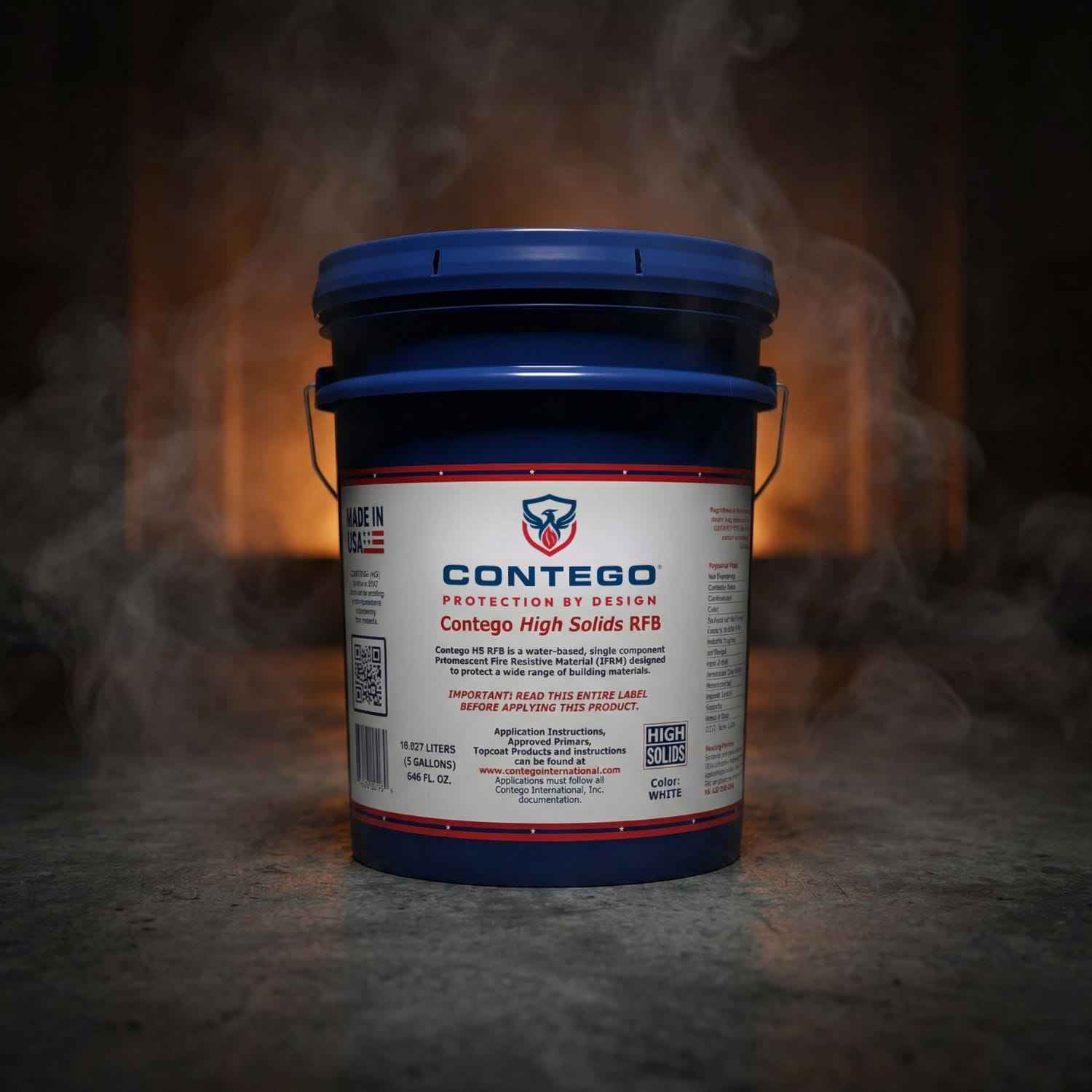
Contego High Solids
Recent Posts:
Two Solutions, One Purpose.
Fire Protection That Performs
Contego offers two distinct reactive coating technologies: one engineered for fire-resistance ratings on structural steel, and another designed for flame spread reduction on combustible substrates.
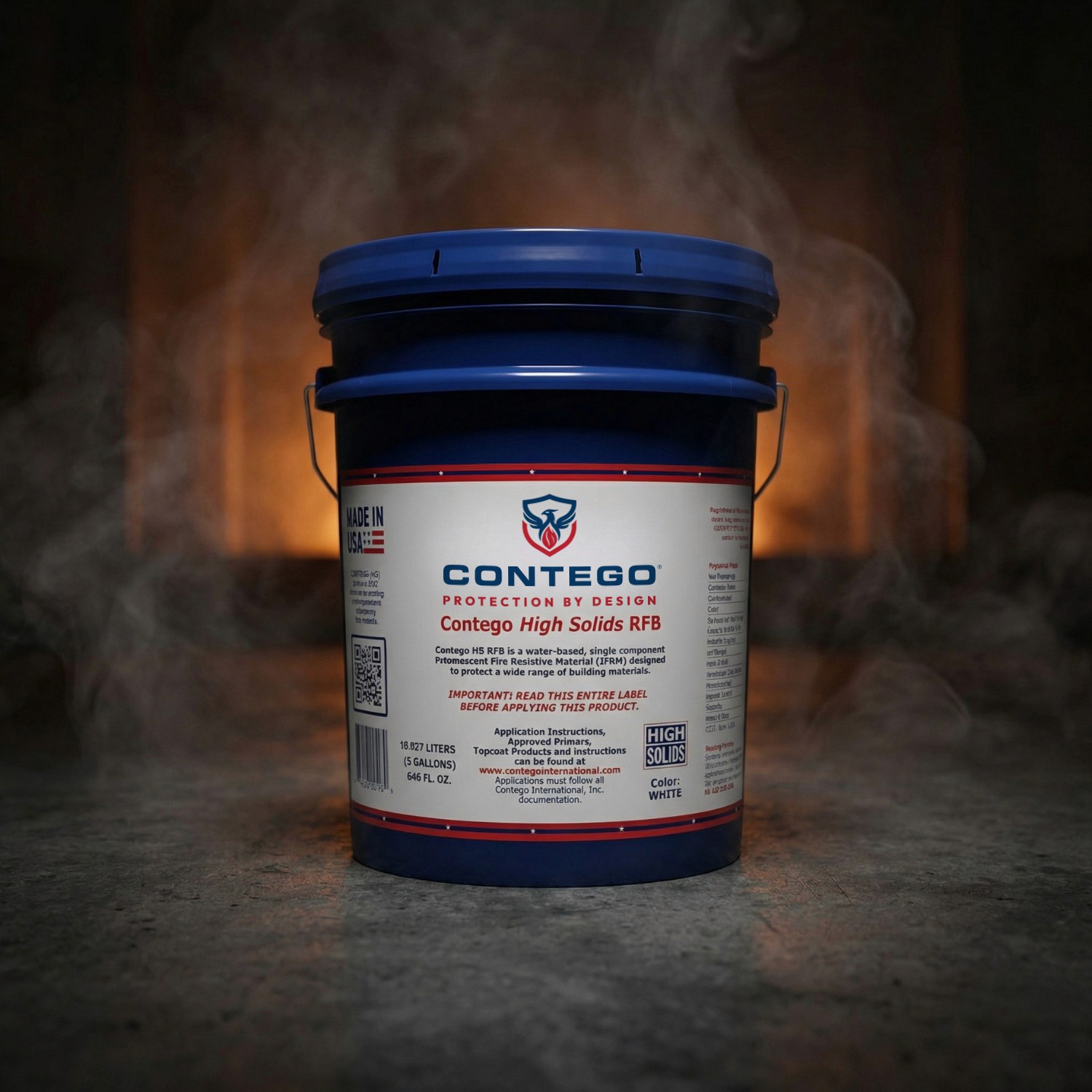
The Best in Fire Resistance
Thin-Film Intumescent Fire Protection for Structural Steel Contego listings protect a wide range of steel section factors, giving engineers greater flexibility across different structural shapes.
Key benefits:
Thin-Film Fire Protection
Low DFT Requirements
Broad Section Factor Coverage (W/D)
LEED v4, v4.1, and v5 Support
Tested Up to 3-Hour Ratings
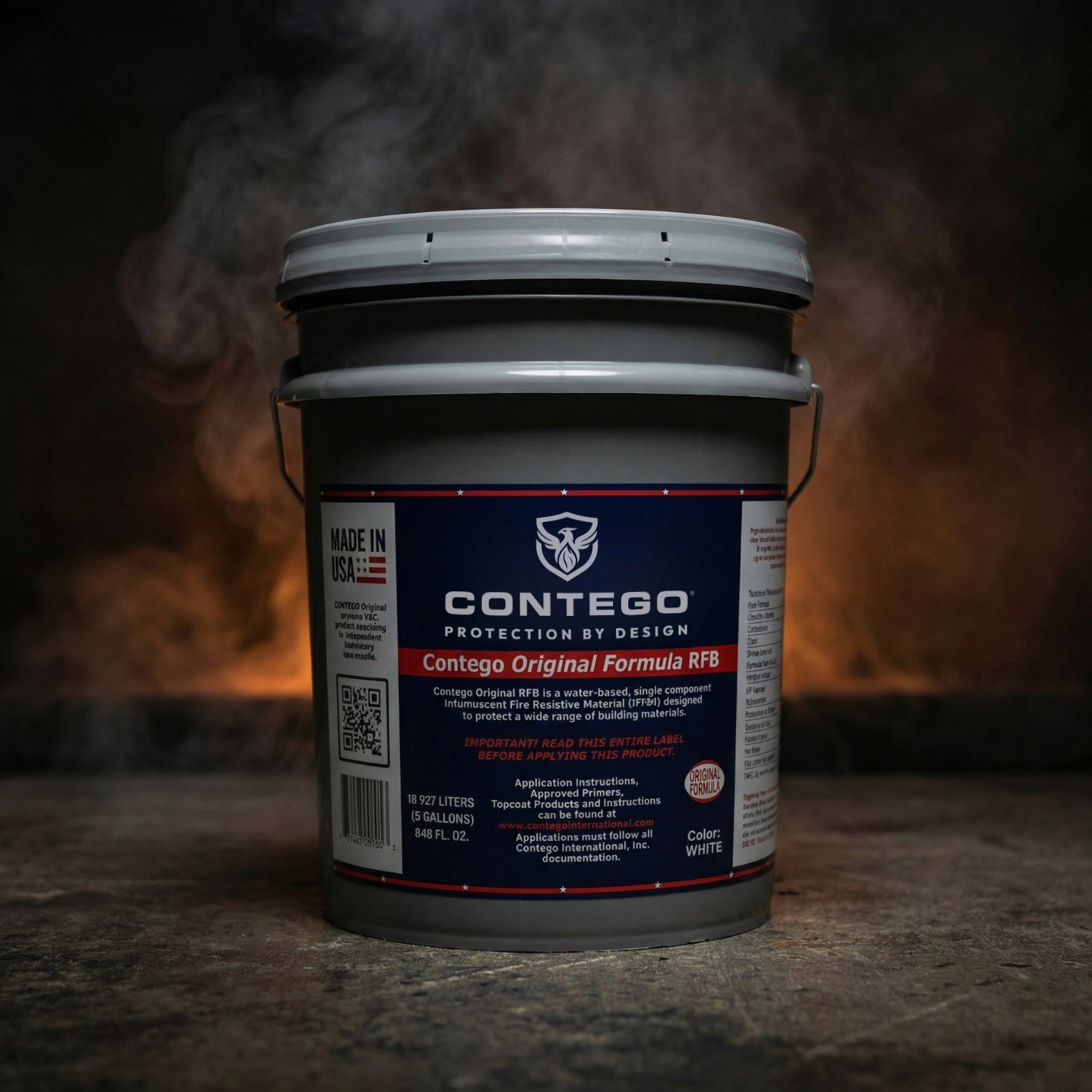
The Best in Fire Retardants
Fire Retardant Protection for Interior Building Materials Designed to improve the surface burning performance of common interior materials such as wood, foam, and SIP panels.
Key benefits:
Class A Fire Retardant Performance
Protects Multiple Interior Substrates
Smooth Architectural Finish
Zero VOC / Non-Toxic
Economical Fire Protection