

Signs Your Steel Beam Fire Protection Is Underspecified
Jun 29, 2026
How to Specify Fireproofing for Structural Steel Beams
Fire Protection Starts During Design—Not During Construction
Proper fireproofing for structural steel beams begins long before the first gallon of intumescent coating is applied. The decisions made during design and specification determine whether a project moves smoothly through submittals and inspections or ends up facing costly delays and rework.
Fireproofing is much more than selecting a product with a published fire rating. Every structural member has unique characteristics that affect how quickly it heats during a fire and how much protection it requires. Choosing the correct fireproofing system means understanding the building code, selecting the appropriate fire-resistance assembly, calculating the required coating thickness, and ensuring the entire system matches a published listing.
Whether you're designing a commercial office building, hospital, school, manufacturing facility, warehouse, or mixed-use development, understanding the fundamentals of structural steel fireproofing can save significant time and money throughout the life of the project.
Step 1: Determine the Required Fire-Resistance Rating
The first step in specifying fireproofing is determining the required fire-resistance rating.
Depending on the building type, occupancy, and construction classification, structural steel may require:
1-Hour Fire Resistance
2-Hour Fire Resistance
3-Hour Fire Resistance
4-Hour Fire Resistance
These ratings are established by the applicable building code and the overall fire protection strategy for the structure.
It is important to recognize that not every beam or column within a building necessarily requires the same level of protection. Primary structural members, transfer beams, roof framing, and secondary framing may have different fire-resistance requirements depending on the building design.
Once the required hourly rating has been established, the next step is selecting a tested fire-resistance assembly.
Step 2: Select the Correct UL or Intertek Fire-Resistance Listing
Fireproofing products are not tested as standalone coatings. They are tested as part of complete structural assemblies.
Published UL and Intertek fire-resistance listings identify:
Structural member type
Fire-resistance rating
Required dry film thickness (DFT)
W/D or A/P limitations
Approved primers
Compatible topcoats
Installation requirements
Simply specifying an "intumescent coating" or "fire-rated paint" is not enough.
The published listing should match your project's:
Structural member type
Beam or column orientation
Required hourly rating
Primer system
Finish system
Interior or exterior exposure, where applicable
Matching the project to the appropriate published listing helps ensure code compliance and simplifies the approval process with the Authority Having Jurisdiction (AHJ).
Step 3: Understand Why W/D Matters
One of the most important concepts in structural steel fireproofing is massivity.
For wide-flange steel members, massivity is commonly expressed as W/D, which compares the weight of the steel member to its heated perimeter. W/D is one of the primary factors used to determine how much intumescent fireproofing is required.
Members with lower W/D values have lower massivity, meaning they contain less steel mass relative to the amount of surface exposed to fire. These members heat more quickly during a fire and therefore require greater dry film thickness (DFT) to maintain their structural capacity.
Members with higher W/D values have greater massivity, allowing them to absorb heat more slowly. As a result, they generally require less intumescent coating to achieve the same fire-resistance rating.
For example, a structural member with a W/D of 0.52 has significantly less massivity than a member with a W/D of 1.12. Although both members may require a 2-hour fire-resistance rating, the 0.52 W/D member will typically require considerably more intumescent coating because it reaches critical steel temperatures much faster during a fire.
This is why published UL and Intertek listings include DFT tables based on W/D values rather than specifying one coating thickness for every beam. A blanket specification such as "apply 60 mils to all structural steel" may overprotect some members while leaving others under-protected.
Using the appropriate W/D value for each structural member ensures the fireproofing system matches the tested assembly while avoiding unnecessary material costs.
Step 4: Specify Compatible Primers and Topcoats
A fireproofing system includes more than just the intumescent coating.
Successful specifications should also address:
Surface preparation requirements
Approved primer systems
Shop-applied coatings
Field touch-up procedures
Compatible topcoats
Environmental limitations during application
Changing a primer or topcoat without confirming compatibility may move the installation outside the published UL or Intertek listing.
Early coordination between the structural steel fabricator, painting contractor, and fireproofing manufacturer helps prevent these issues before steel reaches the jobsite.
Step 5: Avoid Common Specification Mistakes
Many project delays result from relatively simple specification errors.
Some of the most common include:
Omitting UL or Intertek listing numbers.
Specifying a single DFT for all structural members.
Using outdated fire-resistance listings.
Applying beam listings to columns or vice versa.
Failing to coordinate primers and finish coatings.
Not updating fireproofing schedules after structural revisions.
Omitting inspection requirements from the project specifications.
Most of these problems can be avoided during design by reviewing the published fire-resistance listing alongside the structural drawings before construction begins.
Step 6: Plan for Inspection Before Installation Begins
Successful inspections begin during specification—not after the coating has been applied.
Before installation starts, project teams should verify:
Applicable UL or Intertek listing numbers
Required fire-resistance ratings
W/D or A/P values for each member
Required dry film thickness (DFT)
Approved primer and topcoat systems
Inspection procedures
Dry film thickness verification methods
Providing this information during submittals gives contractors, inspectors, and the AHJ confidence that the installed system matches the tested assembly.
Better Specifications Lead to Better Fire Protection
Structural steel fireproofing should never rely on assumptions or blanket coating thicknesses.
Every building contains structural members with different levels of massivity, different fire-resistance requirements, and different installation conditions. Properly matching the fireproofing system to those variables results in better code compliance, smoother inspections, and more efficient use of materials.
At Contego International, we work with architects, engineers, contractors, and owners to help interpret UL and Intertek fire-resistance listings, calculate W/D and A/P values, determine required dry film thickness, and develop practical fireproofing solutions for structural steel. Our goal is to simplify the specification process while providing fire protection systems backed by full-scale testing and third-party certification.
Build Your Next Project With Confidence
Whether you're designing a new structure or reviewing an existing fireproofing specification, understanding fire ratings, W/D values, published fire-resistance listings, and compatible coating systems is essential for achieving code compliance and long-term performance.
If you need assistance reviewing project specifications, calculating required DFT, or selecting the appropriate UL or Intertek listed fireproofing system, the technical team at Contego International is ready to help.
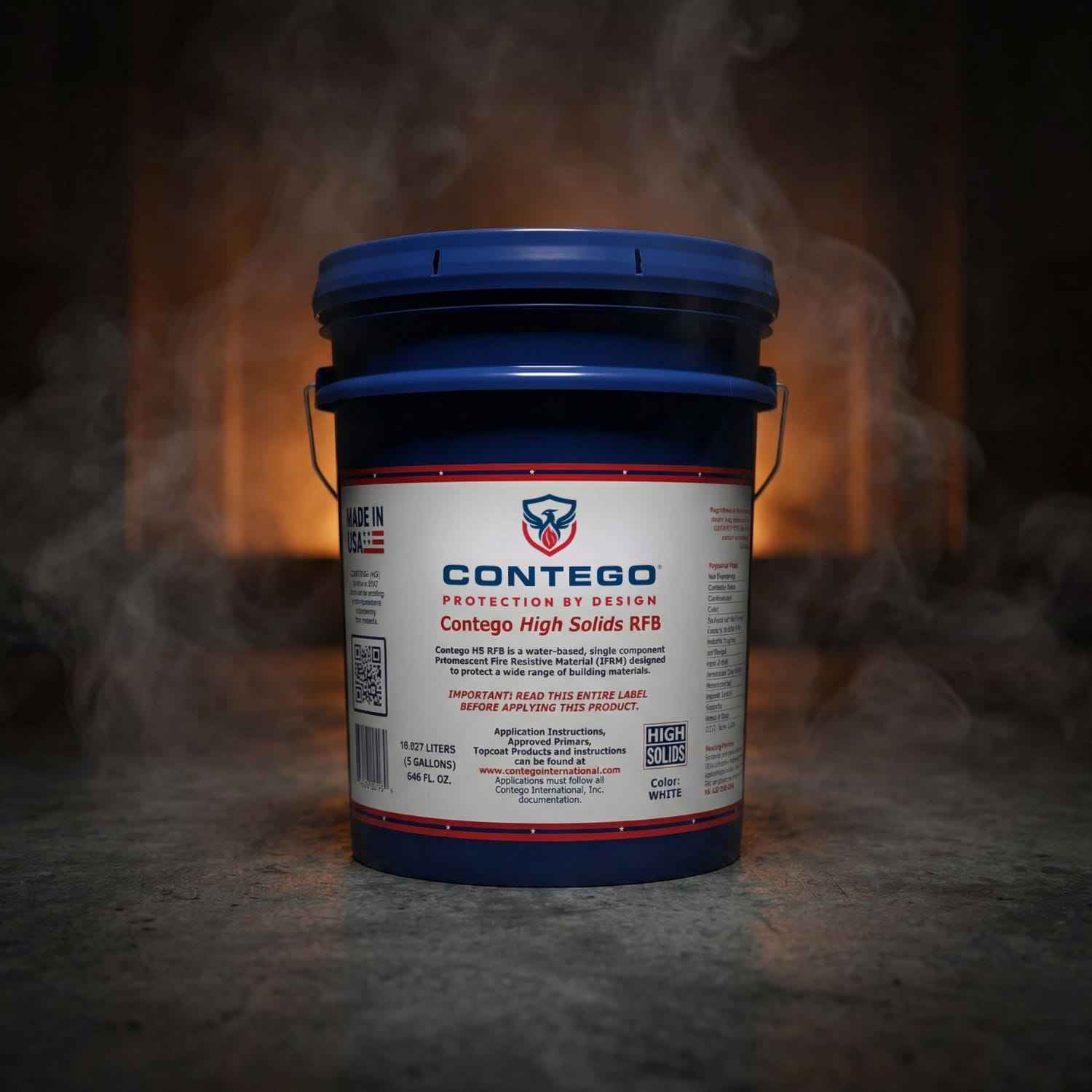
Contego High Solids
Recent Posts:
Two Solutions, One Purpose.
Fire Protection That Performs
Contego offers two distinct reactive coating technologies: one engineered for fire-resistance ratings on structural steel, and another designed for flame spread reduction on combustible substrates.
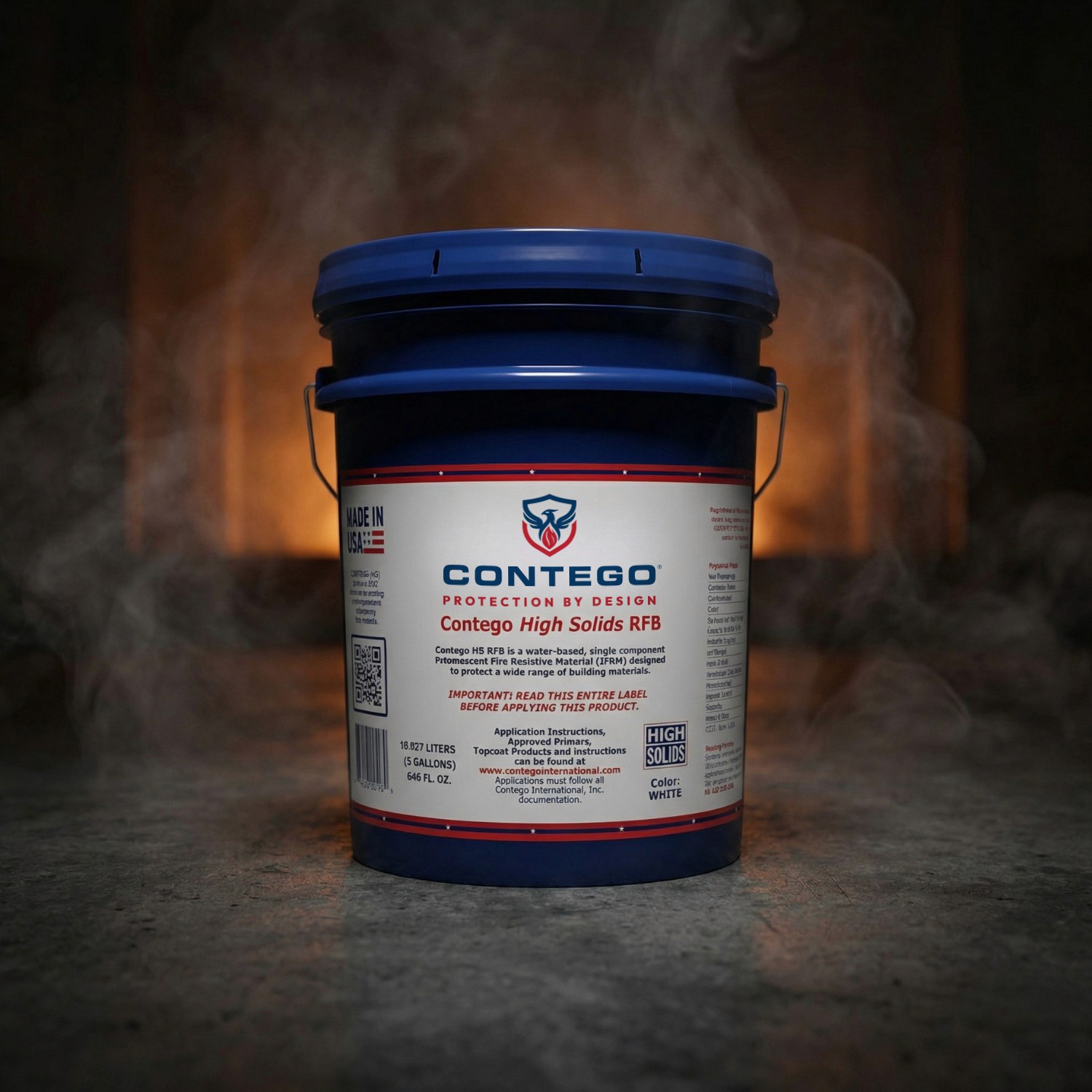
The Best in Fire Resistance
Thin-Film Intumescent Fire Protection for Structural Steel Contego listings protect a wide range of steel section factors, giving engineers greater flexibility across different structural shapes.
Key benefits:
Thin-Film Fire Protection
Low DFT Requirements
Broad Section Factor Coverage (W/D)
LEED v4, v4.1, and v5 Support
Tested Up to 3-Hour Ratings
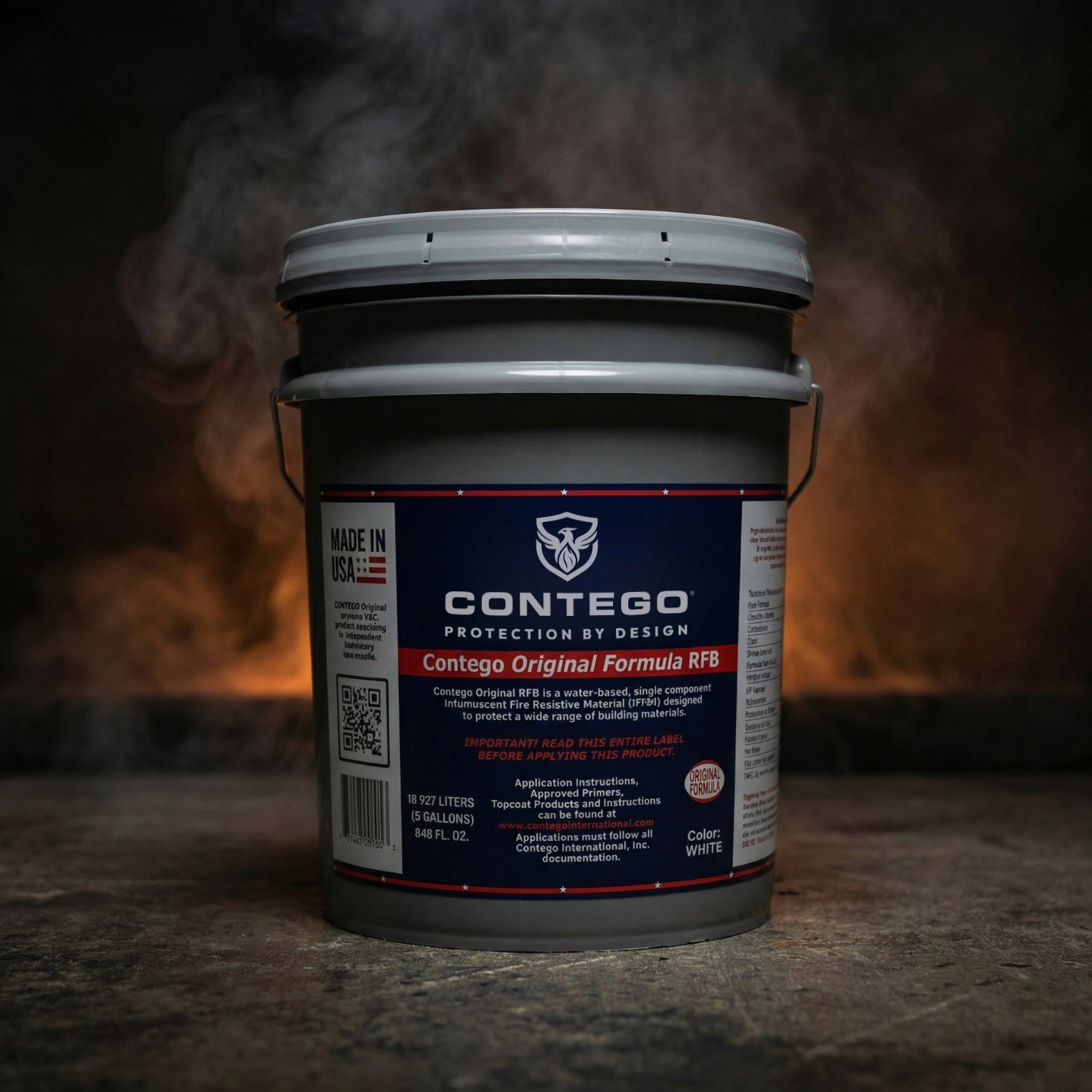
The Best in Fire Retardants
Fire Retardant Protection for Interior Building Materials Designed to improve the surface burning performance of common interior materials such as wood, foam, and SIP panels.
Key benefits:
Class A Fire Retardant Performance
Protects Multiple Interior Substrates
Smooth Architectural Finish
Zero VOC / Non-Toxic
Economical Fire Protection